

Why Is Material Safety Critical in Pressing Comb Brass Production?
2026-11-09
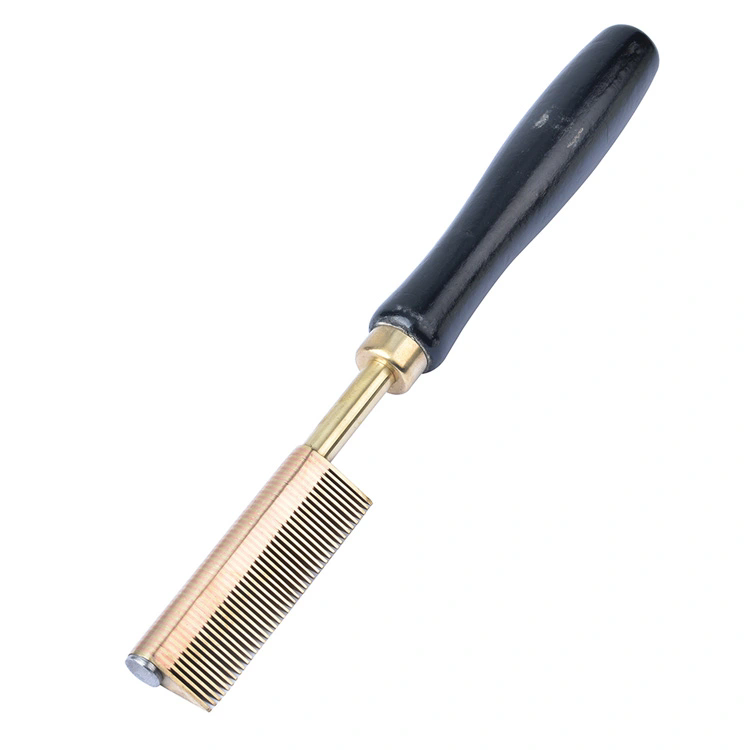
A buyer receives two samples of Pressing Comb Brass with the same dimensions and the same polished finish. One sample is made from a standard free-machining brass that contains lead. The other is made from a low-lead brass that has been developed for skin-contact products. On the surface, the two combs look identical. In service, the difference matters because the comb is held against the scalp, heated, and used repeatedly. Heat, moisture, and abrasion can accelerate the release of alloying elements from the surface. This is why material safety in Pressing Comb Brass production is not a paperwork issue. It is a product safety issue that must be controlled from the melt through the final surface treatment. This guide explains the critical control points.
1. Why Does Skin Contact Turn Brass Composition Into a Safety Issue?
Brass is an alloy of copper and zinc, and many free-machining grades contain lead to improve chip formation. Lead is added because it acts as a solid lubricant at the cutting edge, which allows high-speed machining and a smooth surface finish. The same lead that improves machinability can migrate to the surface and be released when the part is in contact with skin, especially when the skin is moist or when the part is warmed. Nickel is another concern. Some brass grades contain nickel as an alloying element or as an impurity, and nickel release is regulated for items that come into prolonged contact with skin. In our factory, we produce Pressing Comb Brass for personal care and salon use, and we treat material safety as a design requirement. Ningbo Ruishi Technology Co., Ltd. has been manufacturing brass components for over 12 years.
The regulatory framework is not uniform across markets. The European Union restricts lead in articles that may be placed in the mouth or in contact with skin. The United States has state-level rules such as California Proposition 65. Nickel release is regulated under EN 1811 and EN 12472 for items intended for prolonged skin contact. A comb that is sold in one market may not meet the requirements of another market if the alloy and the surface treatment are not selected correctly.
2. Which Elements in Pressing Comb Brass Must Be Controlled Before Machining?
The alloy specification is the first control point. The buyer and the manufacturer must agree on the copper content, the zinc content, the lead content, and the maximum levels of impurities such as cadmium, arsenic, antimony, and mercury. The alloy must also have the mechanical properties required for the comb teeth. A comb tooth must be stiff enough to penetrate the hair and tough enough not to fracture. A high-lead brass is easy to machine but may not meet the skin-contact requirement. A low-lead brass is safer but more difficult to machine and may require a different tool geometry and cutting speed. The table below compares three brass grades that are commonly considered for combs.
| Brass grade | Nominal composition | Lead content | Machinability | Skin-contact suitability |
| CuZn39Pb3 | Copper 57 to 59 percent, zinc balance, lead 2.5 to 3.5 percent | High | Excellent | Poor for prolonged skin contact |
| CuZn37 | Copper 62 to 64 percent, zinc balance | Low (impurity only) | Moderate | Good, with surface control |
| CuZn36 low-lead | Copper 63 to 65 percent, zinc balance, lead below 0.1 percent | Very low | Moderate to good | Very good |
In our factory, we require a material certificate with the heat number for every batch of Pressing Comb Brass. We also perform an X-ray fluorescence screening on the incoming bar to verify that the lead content matches the certificate. If the screening result is above the limit, the batch is rejected before it reaches the machining line. RAYVEX keeps the screening record with the production traveler so that the finished comb can be traced back to the heat.
3. How Do Melting, Casting, and Machining Steps Create Exposure Risks?
The production process creates two types of exposure risk. The first is worker exposure. Melting and casting can generate metal fume and dust that contain lead, zinc, and copper. Machining generates chips and fine dust that can be inhaled or ingested. The second is product contamination. If the chips from a high-lead brass are mixed with the chips from a low-lead brass, the recycled material can contaminate the low-lead batch. If the cutting fluid contains lead or other restricted substances, the residue can remain on the comb after machining. In our factory, we use a separate machining cell for low-lead Pressing Comb Brass and we do not mix chips between grades. We also use a cutting fluid that is free from restricted substances and we monitor the fluid condition. The local exhaust ventilation at the machining centers captures the dust at the source. We test the workplace air for lead and copper at least twice per year.
The machining process also affects the surface finish, which in turn affects the release of alloying elements. A rough surface has a larger real area in contact with the skin and can trap residue. A polished surface has a smaller real area and is easier to clean. We machine the comb teeth with a sharp tool and a controlled feed rate to avoid smearing and tearing. We then polish the surface to a roughness of Ra 0.4 microns or better.
4. Why Does Surface Treatment Decide Whether the Finished Comb Meets Nickel and Lead Limits?
The surface treatment is the final barrier between the alloy and the skin. A clean, well-controlled surface reduces the release of lead and nickel. A plated surface can provide a barrier, but the plating itself must be free from restricted substances and must not flake or wear through. The surface treatment also affects the corrosion resistance. Brass can dezincify in humid conditions, leaving a copper-rich porous layer that releases more ions. A passivation treatment can stabilize the surface and reduce the release. In our factory, we use a multi-stage cleaning and passivation process for Pressing Comb Brass. We do not use nickel plating on skin-contact combs unless the customer specifically requires it and the nickel release has been verified. The table below shows the tests that we perform on the finished comb.
| Test item | Test method | Typical limit or target | Purpose |
| Lead content in alloy | ICP-OES or XRF screening | Below 0.1 percent for low-lead grade | Verify alloy composition |
| Cadmium content | ICP-OES | Below 0.01 percent | Restricted substance control |
| Nickel release | EN 1811, after EN 12472 wear simulation | Below 0.5 micrograms per square centimeter per week | Skin-contact compliance |
| Lead release | EN 12472 migration test | Below 0.05 micrograms per square centimeter per week | Skin-contact compliance |
| Surface roughness | Profilometer | Ra 0.4 microns or better | Reduce real contact area |
| Salt spray resistance | ASTM B117 | 24 to 48 hours without base metal corrosion | Corrosion and dezincification resistance |
Materials engineer's note: The nickel release test is often the most difficult to pass because the release depends on the alloy, the surface finish, the wear simulation, and the test solution. A comb that passes the nickel release test in the as-received condition may fail after the wear simulation if the surface layer is thin or porous. In our factory, we run the wear simulation before the release test and we adjust the passivation process until the release is below the limit. Ningbo Ruishi Technology Co., Ltd. provides the test report with each production lot.
5. How Should Buyers Specify and Verify Material Safety in Pressing Comb Brass Orders?
The specification should include seven items. The first is the alloy grade and the maximum lead content. The second is the maximum levels of cadmium, arsenic, antimony, and mercury. The third is the surface treatment and the passivation requirement. The fourth is the nickel release limit and the test method. The fifth is the lead release limit and the test method. The sixth is the surface roughness requirement. The seventh is the material traceability requirement, including the heat number. The verification should include four checks. The first is the material certificate review. The second is the XRF screening of the incoming bar. The third is the release test on the finished comb. The fourth is the surface roughness measurement. In our factory, we perform these checks on every lot and we keep the records for at least five years. RAYVEX also offers a pre-production sample for the buyer to send to an independent laboratory for confirmation.
We recommend that the buyer specify the release limit in the units used by the test method, not just the phrase "nickel free." A product can be nickel free in the alloy and still fail the release test if the surface is contaminated or if the passivation is inadequate. The release limit is the performance requirement that matters for skin contact.
Frequently Asked Questions About Material Safety in Pressing Comb Brass Production
Summary for Buyers and Production Engineers
Material safety in Pressing Comb Brass production is controlled through four stages: alloy selection, melt and machining control, surface treatment, and finished-product verification. The alloy must be selected for low lead and low impurity content. The machining must be separated by grade and must produce a smooth, clean surface. The surface treatment must passivate the brass and must not introduce nickel or other restricted substances. The finished comb must be tested for nickel and lead release, and the results must be traceable to the heat number. Ningbo Ruishi Technology Co., Ltd. has been manufacturing brass components for over 12 years and provides full material safety documentation and testing support for our customers.