

Why Does Pressing Comb Brass Still Matter for Professional Hair Straightening?
2026-05-14
When I look at the way salons, beauty retailers, and hair tool distributors choose a hot styling product, I rarely see buyers caring about appearance alone. They care about heat response, hand feel, daily reliability, repeat orders, and whether the tool can handle real customer routines without creating extra complaints. That is why I pay close attention to manufacturers with practical production experience, and Ningbo Ruishi Technology Co., Ltd. naturally comes into the discussion when I evaluate Pressing Comb Brass for professional and wholesale hair styling needs.
A pressing comb may look simple at first glance, but anyone who has used one in a salon environment knows the details matter. The weight of the comb, the spacing of the teeth, the heat transfer performance, the handle comfort, and the consistency of the finish can all affect the final styling result. For textured hair, edges, roots, wigs, and small sections that need controlled straightening, a brass pressing comb remains a very practical choice.
What Makes Brass a Practical Material for a Pressing Comb?
I like brass in hair styling tools because it gives a useful balance between heat conductivity and stability. A comb head that heats unevenly can leave some sections under-straightened while exposing other sections to unnecessary heat. That is one of the most common problems buyers want to avoid when sourcing pressing combs in bulk.
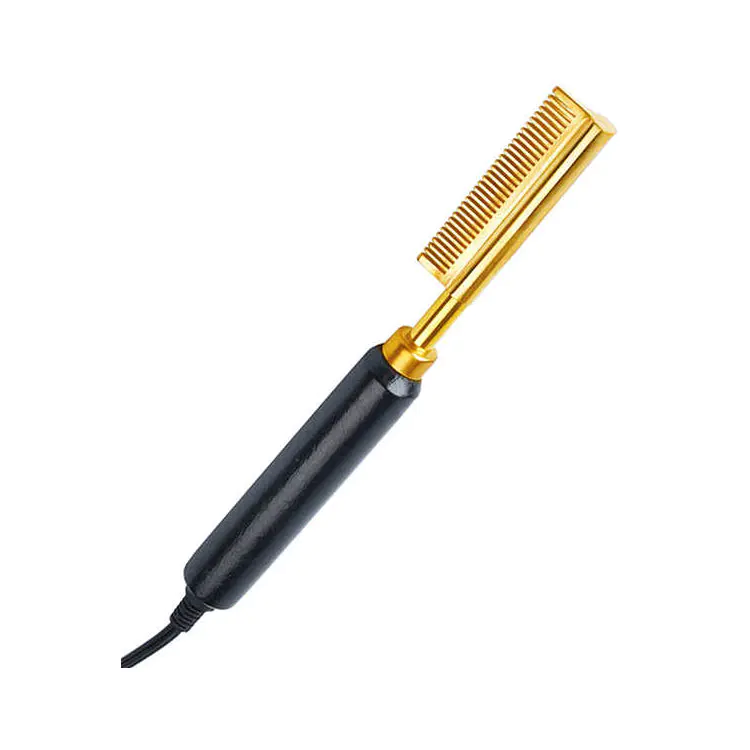
With a well-made Pressing Comb Brass, the comb head can deliver steady heat across the teeth, helping users work through roots, edges, and textured strands with better control. This does not mean the tool should be overheated or used carelessly. It means the material gives the user a more predictable foundation when styling properly.
- Brass supports stable heat transfer for controlled straightening.
- The material has a solid feel that many salon users prefer.
- It can help improve contact between the comb teeth and hair sections.
- It is suitable for professional styling, home use, and wholesale beauty supply channels.
- It gives distributors a product category with long-term market familiarity.
How Does a Pressing Comb Brass Help Solve Real Styling Problems?
Many buyers are not simply looking for another hair tool to add to a catalog. They are trying to solve very specific customer pain points. Some users want smoother roots before silk pressing. Some need a tool for wigs and hairpieces. Some want better control near the hairline where a flat iron can feel too wide. This is where a Pressing Comb Brass becomes useful.
Compared with larger straightening tools, a pressing comb can reach tighter areas more easily. The teeth allow the stylist to guide the hair while applying heat, which makes the process feel more controlled. For salons, this can mean cleaner results around the edges and roots. For retailers, it means the product has a clear use case that customers can understand quickly.
| Customer Pain Point | How Pressing Comb Brass Helps | Business Value for Buyers |
|---|---|---|
| Roots are difficult to straighten with wide plates | The comb teeth can reach closer to the root area with better guidance | Useful for salons, wig stylists, and beauty supply stores |
| Hairline styling requires more control | The slim comb shape helps users work around edges and small sections | Creates a clear selling point for textured hair care customers |
| Uneven heating affects styling results | Brass supports steady heat distribution when properly manufactured | Reduces complaints related to inconsistent performance |
| Cheap tools feel unstable in daily use | A well-built brass comb head gives a solid, durable feel | Improves perceived product value in wholesale markets |
Why Do Professional Buyers Still Ask for Pressing Comb Brass?
From my experience, professional buyers keep asking for Pressing Comb Brass because the product serves a clear and repeatable purpose. It is not a trend item that only works for a short season. Pressing combs have been used for years across salons, beauty schools, wig care routines, and personal styling kits.
For importers and distributors, that matters. A product with familiar demand is easier to explain, easier to position, and easier to sell through different channels. It can work for beauty supply stores, salon tool wholesalers, e-commerce sellers, and private-label buyers who want a focused hair straightening product line.
- I would consider it for buyers serving textured hair care markets.
- I would recommend it for catalogs that already include hot combs or straightening tools.
- I would position it as a practical tool for roots, edges, wigs, and detailed styling.
- I would compare different tooth patterns before choosing a final model.
- I would check handle insulation, finish quality, heating performance, and packaging options before ordering.
Which Product Details Should I Check Before Ordering in Bulk?
Before placing a wholesale order, I would never judge a pressing comb by photos alone. The shape may look similar from one supplier to another, but the real difference often appears in the comb head finish, tooth spacing, weight balance, handle design, and production consistency.
A reliable Pressing Comb Brass should feel practical in the hand. The teeth should be smooth enough to pass through hair without unnecessary pulling. The handle should support safe and comfortable use. The overall structure should feel stable enough for repeated daily handling.
| Inspection Point | What I Look For | Why It Matters |
|---|---|---|
| Comb teeth | Smooth finish, proper spacing, no rough burrs | Helps reduce snagging and improves user comfort |
| Brass comb head | Stable structure and even surface treatment | Supports consistent styling performance |
| Handle design | Comfortable grip and heat-conscious structure | Important for salon users who hold the tool for long periods |
| Packaging | Retail-ready box, clear product information, custom options | Helps distributors sell through online and offline channels |
| Supplier communication | Clear specifications, sample support, stable production response | Reduces sourcing risk for wholesale buyers |
How Can Pressing Comb Brass Support a Stronger Beauty Tool Line?
If I were building a beauty tool product line, I would not treat a pressing comb as a small accessory. I would treat it as a focused styling tool with its own audience. Customers who buy pressing combs often know exactly what they need. They may be salon professionals, textured hair users, wig stylists, barbers, beauty students, or retailers serving customers who need root and edge control.
That makes Pressing Comb Brass valuable from a product positioning angle. It can sit beside hot combs, electric combs, straightening brushes, curling tools, and wig care accessories. When the product page explains the right use cases clearly, buyers can understand why this tool belongs in the line.
- For salons, I would highlight control, root access, and practical handling.
- For beauty supply stores, I would focus on customer familiarity and repeat demand.
- For e-commerce sellers, I would use clear product images and straightforward usage benefits.
- For private-label buyers, I would ask about logo, packaging, and specification customization.
- For distributors, I would compare model variety and supply stability before scaling orders.
Is Pressing Comb Brass Suitable for Textured Hair and Wig Styling?
Yes, it can be suitable when it is used correctly and matched with the right styling method. I would not describe any heat tool as a magic answer for every hair type, because hair condition, temperature control, preparation, and user skill all matter. Still, a well-designed pressing comb is especially useful for styling areas that need direct control.
For wigs and hairpieces, the comb format can help users work close to part lines, roots, and small sections. For textured hair, it can help smooth the root area before finishing the style. For edges and hairlines, it offers a level of access that wider tools may not provide as easily.
This is also why product education matters. A buyer should not only sell the tool; the buyer should help customers understand proper heat habits, sectioning, and careful use. Clear instructions can reduce misuse and improve customer satisfaction.
Why Would I Consider Ningbo Ruishi Technology Co., Ltd. for Sourcing?
When I evaluate a supplier, I care about more than one product photo. I look at whether the company understands the category, whether it offers related hair styling products, whether it can communicate with wholesale buyers, and whether it supports inquiry-based cooperation. Ningbo Ruishi Technology Co., Ltd. works in the hot comb and pressing comb field, which makes the company relevant for buyers who want to source from a specialized manufacturer rather than a random mixed-product trader.
For buyers, that category focus can make communication easier. It helps when a supplier understands product structure, common market terms, packaging expectations, and the difference between models. This is especially important when buyers need repeat orders, private-label packaging, or product line planning.
| Buyer Need | Why Supplier Focus Matters |
|---|---|
| Stable product category | A focused manufacturer is more likely to understand hot comb and pressing comb requirements. |
| Wholesale communication | Clear inquiry handling helps buyers confirm models, quantity, and packaging details. |
| Product variety | Related comb products make it easier to build a complete hair styling tool line. |
| Market positioning | Specialized products are easier to introduce to salons, distributors, and online retailers. |
How Should Buyers Position Pressing Comb Brass in Their Market?
I would position the product around practical styling control, not around exaggerated claims. Customers are more likely to trust a product description that explains where the comb works best and why the material matters. For example, I would mention root straightening, edge control, wig styling, textured hair care, and salon use. These are concrete selling points that match real customer searches.
A strong product page or sales listing for Pressing Comb Brass should include clear images, size details, material information, usage scenarios, packaging options, and inquiry instructions. If the product is sold to distributors, I would also include minimum order details, customization possibilities, and shipping support where available.
- Use simple product language that customers can understand quickly.
- Show the comb head clearly from multiple angles.
- Explain whether the model is suitable for salon, retail, or personal care channels.
- Make the inquiry process easy for wholesale buyers.
- Avoid overpromising results that depend on hair condition or user technique.
What Should I Remember Before Sending an Inquiry?
Before I contact a supplier, I usually prepare a short list of questions. This keeps the conversation efficient and helps both sides avoid vague back-and-forth messages. For a pressing comb order, I would ask about product specifications, sample availability, packaging, customization, lead time, and target market suitability.
I would also describe my sales channel. A salon distributor may need different packaging from an online seller. A private-label brand may care more about logo printing and carton details. A beauty supply wholesaler may focus on price tiers and repeat order stability. The more clearly I explain the market, the easier it is for the supplier to recommend the right model.
| Question I Would Ask | Reason |
|---|---|
| Which brass pressing comb models are available? | To compare style, size, tooth design, and market fit. |
| Can I request samples before bulk ordering? | To check finish, handling, and product details directly. |
| Do you support custom packaging or logo service? | To prepare retail or private-label sales. |
| What information should I provide for a quotation? | To receive a more accurate price and production reply. |
Why Is Pressing Comb Brass Worth Adding to a Wholesale Catalog?
I would add Pressing Comb Brass to a wholesale catalog because it has a defined purpose, a recognizable customer base, and practical styling value. It is not trying to replace every straightening tool. Instead, it serves the areas where a comb format makes sense: roots, edges, detailed sections, textured hair care, and wig styling.
For buyers who want a focused hair tool with clear market demand, this product category is worth serious consideration. The key is to choose a supplier that understands the product, communicates clearly, and supports the business needs behind the order.
If you are comparing pressing comb options, planning a wholesale hair tool line, or looking for a dependable manufacturer for Pressing Comb Brass, now is a good time to discuss specifications, samples, packaging, and order details. Leave your inquiry today or contact us to get product information and a quotation that matches your market needs.