

Why Does Pressing Comb Brass Heat Up Three Times Faster Than Iron?
2026-10-26
A stylist plugs in two pressing combs at the same time. One has a Pressing Comb Brass body, the other has an iron body. Both are rated at 40 watts. The brass comb reaches working temperature in about 30 seconds. The iron comb takes more than 90 seconds. The stylist notices the difference immediately, but the reason is not the wattage. It is the combination of thermal conductivity, specific heat capacity, and density of the two materials. This guide explains the physics behind the three-times difference and what it means for styling performance.
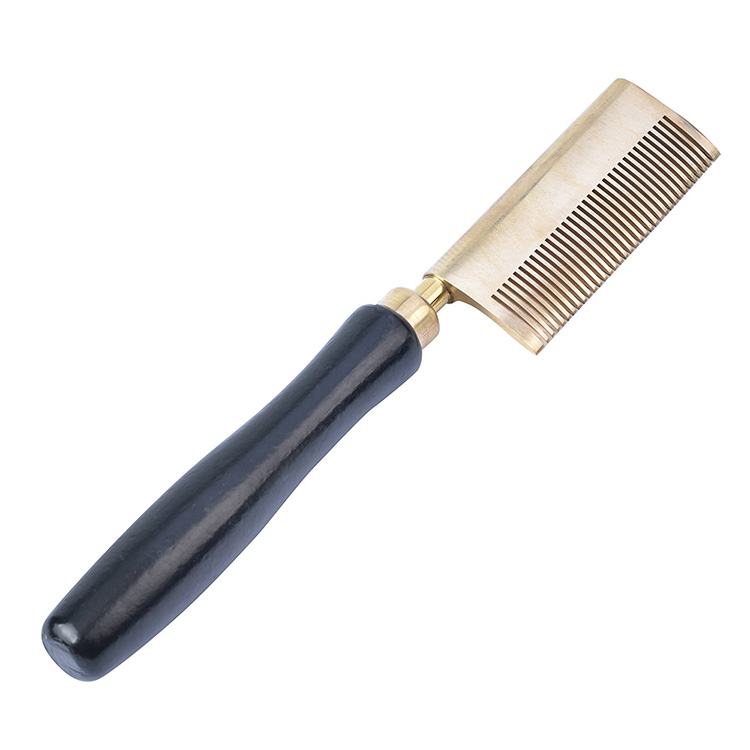
1. Why Does the Thermal Conductivity of Brass Differ From That of Iron?
Thermal conductivity is the ability of a material to conduct heat. Brass has a thermal conductivity of approximately 120 W/mK. Iron has a thermal conductivity of approximately 50 W/mK. This means that heat travels through brass more than twice as fast as it travels through iron. When the heating element transfers energy to the comb body, the brass distributes that energy to the teeth more quickly. The iron body absorbs the energy at the base, but the heat takes longer to reach the tooth tips. In our factory, we test the heating profile of every Pressing Comb Brass model with a thermal camera. Ningbo Ruishi Technology Co., Ltd. has been manufacturing pressing combs for over 10 years.
However, thermal conductivity alone does not explain the three-times difference. A material with high conductivity but high heat capacity would still take a long time to heat up. The second factor is the specific heat capacity, and the third is the density. The combination of these three properties determines the rate at which the comb body temperature rises for a given power input.
2. What Happens Inside the Comb Body When Current Flows Through the Heating Element?
When current flows through the heating element, the element converts electrical energy into heat. The heat passes through an insulating layer to the comb body. The rate at which the comb body temperature rises depends on the power input and the thermal mass of the body. The thermal mass is the product of the density and the specific heat capacity. A lower thermal mass means a faster temperature rise for the same power input. The table below compares the thermal properties of brass and iron.
| Property | Brass (H62) | Iron (pure) |
| Thermal conductivity (W/mK) | 120 | 50 |
| Specific heat capacity (J/g·K) | 0.38 | 0.45 |
| Density (g/cm³) | 8.5 | 7.9 |
| Volumetric heat capacity (J/cm³·K) | 3.23 | 3.56 |
| Relative heating rate | 1.0 | 0.91 |
The volumetric heat capacity of brass is about 10 percent lower than that of iron. This means that for the same volume and the same power input, brass heats up about 10 percent faster than iron. That is not enough to explain the three-times difference. The remaining difference comes from the thermal path between the heating element and the teeth. Because brass conducts heat more than twice as fast, the heat reaches the teeth more quickly, and the teeth reach working temperature sooner. The perceived heating time is determined by the teeth, not by the body.
Thermal engineer's note: The three-times difference is not a single-property effect. It is the result of three factors working together: higher thermal conductivity, lower volumetric heat capacity, and a shorter thermal path from the element to the teeth. If the comb geometry is the same, the brass comb will always reach the teeth faster than the iron comb. In our factory, we optimize the geometry of the Pressing Comb Brass body to minimize the distance between the heating element and the tooth tips.
3. Why Does the Heat Distribution Across the Teeth Matter More Than Peak Temperature?
A pressing comb is used to straighten hair by transferring heat evenly across the hair strand. If the teeth have different temperatures, the hair will be styled unevenly. Some sections will be over-heated and others will be under-heated. The high thermal conductivity of brass helps to equalize the temperature across the teeth. The heat flows from the hotter regions to the cooler regions, which reduces the temperature difference. Iron has a lower thermal conductivity, so the temperature difference between the tooth tip and the tooth root is larger. The table below shows the typical tooth temperature difference for the two materials under steady-state conditions.
| Parameter | Brass comb | Iron comb |
| Temperature difference across teeth (°C) | 5 – 8 | 15 – 25 |
| Recovery time after contact with hair (seconds) | 2 – 3 | 5 – 8 |
| Temperature stability at steady state (°C) | ±2 | ±5 |
| Uniformity rating | Excellent | Moderate |
The recovery time is the time required for the tooth to return to its set temperature after it has been cooled by contact with damp hair. A shorter recovery time means that the stylist can work continuously without waiting for the comb to reheat. In our factory, we measure the recovery time of every Pressing Comb Brass model. Ningbo Ruishi Technology Co., Ltd. provides the recovery time data with each product specification.
4. What Limits the Heating Speed of a Pressing Comb Brass Even With High Conductivity?
Even a brass comb has a limit to how fast it can heat up. The limit is not the material. It is the power of the heating element, the thermal resistance of the insulating layer, and the response time of the temperature control. If the heating element is undersized, the comb will heat up slowly regardless of the material. If the insulating layer is too thick, the heat transfer from the element to the body is reduced. If the temperature control is slow to respond, the comb may overshoot the set temperature and then cool down, which increases the total time to reach a stable working temperature. In our factory, we use a high-power heating element and a thin insulating layer in our Pressing Comb Brass products. We also use a fast-response temperature sensor that samples the temperature every 0.5 seconds. This combination allows the comb to reach working temperature in 30 to 45 seconds.
We also test the heating curve of every production batch. The test starts from room temperature and records the time to reach 180°C, 200°C, and 220°C. The data is used to verify that the comb meets the specification. Ningbo Ruishi Technology Co., Ltd. provides the heating curve with each shipment so that the customer can verify the performance.
5. How Should Users Verify Heating Performance When Selecting a Pressing Comb?
When selecting a pressing comb, the user should verify three things. The first is the cold-start time to working temperature. The second is the tooth temperature uniformity. The third is the recovery time after contact with hair. The table below shows the recommended values for each parameter, based on the performance of our Pressing Comb Brass products.
| Performance parameter | Recommended value | How to verify |
| Cold-start time to 200°C | 30 – 45 seconds | Use a stopwatch and a contact thermometer |
| Tooth temperature uniformity | ≤ 8°C difference | Measure at three points with an infrared thermometer |
| Recovery time after hair contact | ≤ 3 seconds | Observe the temperature display after styling a section |
| Temperature stability | ± 3°C at steady state | Monitor the display for 5 minutes without use |
In our factory, we recommend that the user perform these checks before using the comb on a client. A comb that heats quickly but has poor temperature uniformity will produce uneven styling results. A comb that has good uniformity but slow recovery will slow down the stylist's workflow. The best comb is the one that balances all three parameters. RAYVEX provides a performance datasheet with every Pressing Comb Brass product so that the user can compare the specifications before purchase.
Frequently Asked Questions About Pressing Comb Brass Heating Performance
Summary for Stylists and Tool Buyers
The Pressing Comb Brass heats up faster than an iron comb because of the combination of higher thermal conductivity, lower volumetric heat capacity, and a shorter thermal path from the heating element to the teeth. The high thermal conductivity also improves the temperature uniformity across the teeth, which produces more consistent styling results. The heating speed is limited by the power of the heating element, the thermal resistance of the insulating layer, and the response time of the temperature control. When selecting a pressing comb, the user should verify the cold-start time, the tooth temperature uniformity, and the recovery time, not just the material label. Ningbo Ruishi Technology Co., Ltd. has been manufacturing pressing combs for over 10 years and provides full thermal performance data for our products.