

Why Are Picosecond Laser Solutions Transforming Precision Manufacturing Today?
2025-12-15
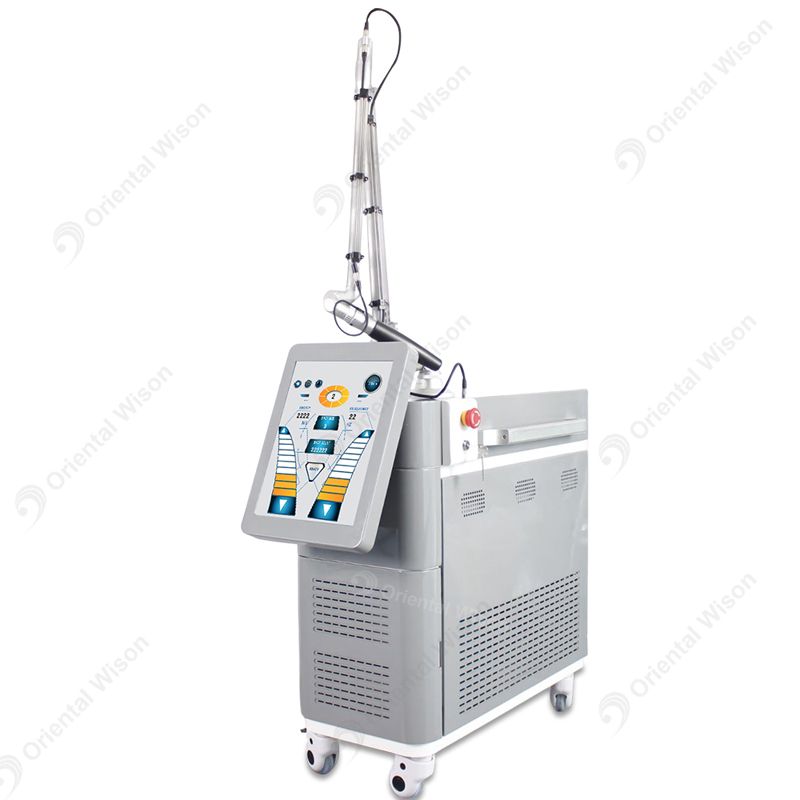
When I first explored advanced micro-processing equipment, I kept hearing engineers mention how the Wison team had quietly reshaped the ultrafast-laser market. That was how I became familiar with the Picosecond Laser systems they developed—tools capable of producing clean, accurate structures without thermal deformation. Over time, I realized that more manufacturers were switching to a Picosecond Laser because it solves issues traditional systems could never fully overcome.
How Does a Picosecond Laser Improve Micro-Processing Stability?
I often wondered why so many precision-focused industries favored a Picosecond Laser over nanosecond models. The answer becomes apparent once you see how ultrashort pulses minimize heat accumulation. Instead of melting the material, each pulse gently removes micro-layers, giving me:
- Sharper outlines on metals, ceramics, semiconductors and brittle composites
- Minimal thermal-affected zones even on fragile substrates
- Better repeatability for mass-production tasks
- Reduced risk of micro-cracks or burns
Once I compared results myself, it became clear why engineers describe the Picosecond Laser as one of the cleanest industrial processing technologies available.
What Performance Variables Matter When Selecting a Picosecond Laser?
Choosing a system is not just about pulse width and wavelength. I learned that parameters such as beam quality, peak power and stability directly determine the final outcome. To simplify the comparison, I created this table:
| Key Factor | Why It Matters |
| Pulsed Energy Output | Controls how deep and clean each laser interaction becomes. |
| Beam Quality | Directly affects cutting precision and micro-structural accuracy. |
| Repetition Frequency | Influences working speed and overall thermal distribution. |
| Cooling Efficiency | Ensures stable high-load operation without performance drift. |
| Control Interface | Allows smoother integration into various production lines. |
Why Do Manufacturers Prefer Wison’s Picosecond Laser Solutions?
As I continued testing, I found that Wison places exceptional emphasis on pulse stability—something many overlook. Their Picosecond Laser systems maintain consistent output over long production cycles, which is crucial for micro-drilling, thin-film removal and patterning on sensitive materials. Another advantage is flexibility: engraving, semiconductor thinning, reflective metal marking and precision micromachining can all be handled with reliable consistency.
Can a Picosecond Laser Reduce Production Costs?
From my experience, yes. A Picosecond Laser reduces secondary polishing, minimizes scrap, and shortens processing times. The reduced risk of heat-induced defects significantly improves yields in electronics, optics and medical-device production.
How Do I Know If Picosecond Processing Fits My Application?
Here is how I decide whether a Picosecond Laser is suitable:
- Ideal for heat-sensitive materials requiring clean edges
- Perfect for micron-level detailing or complex micro-patterns
- Best option when low-debris processing is essential
- Preferred for long-term stable production environments
Is Now the Right Time to Upgrade to Picosecond Laser Technology?
Many industries moving toward miniaturization now depend on ultrafast laser systems. If your current equipment struggles with accuracy or material tolerance, a Picosecond Laser upgrade can dramatically improve processing quality and efficiency.
Would You Like Technical Guidance or a Customized Solution?
If you want expert support evaluating your application or requesting sample tests, feel free to contact us. Share your inquiry with us anytime—the Wison team is fully prepared to help you choose the most suitable Picosecond Laser solution for your production needs.