

What Packaging Options Can Help Organize DIY Lash Extension Kits for Retail?
2026-11-12
1. Why Does the Way a DIY Lash Extension Kit Is Organized Matter More Than the Individual Components?
A retail buyer reviews two DIY Lash Extension kits at the same price point. The first kit contains a lash tray, a bond and seal duo, a applicator, and a pair of tweezers loose inside a folding carton. The second kit contains the same components, but each item sits in a labeled compartment, the bond and seal bottles are held upright, and the applicator is clipped to the lid. The second kit has fewer missing-part complaints, fewer returns, and a higher repeat purchase rate. The difference is not the lash quality. It is the packaging organization. A kit is a system of small parts, and the packaging must make the parts visible, countable, and secure. Pingdu Sparkling Eyelashes Co.,Ltd. has been supplying lash kits to retail programs for over 10 years, and our retail packaging team reviews every kit structure before sampling.
Organization also determines how the kit is replenished. A kit that is packed as a sealed unit cannot be topped up at the store. A kit that uses a compartment tray can be opened, checked, and replenished with a refill pack without repacking the entire unit. For a retailer, this reduces shrink and improves shelf availability. Our factory builds packaging samples around the bill of materials so that the buyer can test the kitting workflow before committing to a production run.
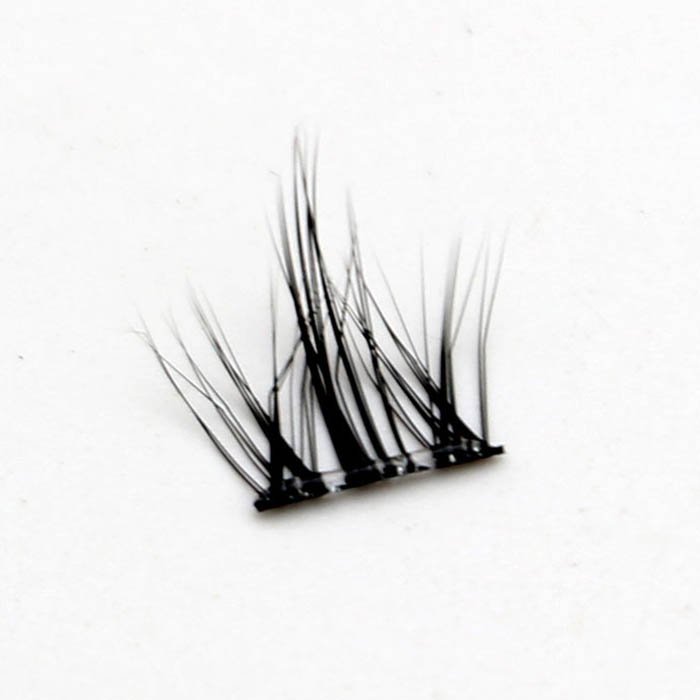
2. How Can Compartmented Trays and Inserts Keep Small Parts Visible and Countable?
The compartment tray is the most direct way to organize a DIY Lash Extension kit. A thermoformed or molded insert with separate cavities for the lash tray, the adhesive bottles, the applicator, and the tweezers prevents the parts from mixing during transport and makes the kit self-explanatory at the shelf. The tray can be made from rPET, molded pulp, or EVA foam. The cavity depth must match the component height so that the lid closes without crushing the lashes. Our insert options include a snap-fit tray that holds the bottles upright and a flat tray with a clear cover for lash visibility.
| Packaging format | Components accommodated | Compartment count | Shelf visibility | Refill capability | Relative cost |
| Folding carton with EVA insert | Lash tray, two bottles, applicator, tweezers | 4 to 5 | Moderate (printed cover) | Good | Low |
| Magnetic book-style box | Lash tray, two bottles, applicator, tweezers, mirror | 5 to 6 | High (opens flat) | Very good | Moderate |
| Clear rPET box with paper sleeve | Lash tray, two bottles, applicator | 3 to 4 | Very high (product visible) | Moderate | Moderate |
| Drawer-style rigid box | Lash tray, two bottles, applicator, tweezers, extra lash set | 6 to 8 | High (drawer reveal) | Good | High |
| Refill pouch with header card | Lash tray only | 1 | Low (hanging display) | Excellent | Very low |
The compartment count should match the component count, with one spare cavity for a future addition such as a cleansing wipe or a mini mirror. A kit with too many empty cavities looks unfinished. A kit with too few cavities forces the parts to overlap, which damages the lash tray. In our factory, we build the tray from the bill of materials and test it with the actual components before approving the design.
3. What Materials and Closure Options Balance Protection and Retail Presentation?
The material choice affects protection, print quality, recyclability, and cost. A DIY Lash Extension kit needs a rigid or semi-rigid structure to protect the lash tray from crushing, a clean surface for branding, and a closure that stays closed during shipping but opens easily at the shelf. The common materials are FSC-certified solid bleached sulfate board, greyboard wrapped with printed paper, rPET, and molded pulp. Sparkling Eyelashes maintains a material library with thickness and print samples so that the buyer can compare the feel and the cost before choosing.
| Material | Typical thickness or grammage | Protection | Printability | Recyclability | Cost index |
| FSC SBS board | 350 to 400 gsm | Moderate | Excellent | Paper stream | 1.0 |
| Greyboard wrapped with paper | 1200 to 1500 gsm | High | Excellent | Paper stream with separation | 1.8 |
| rPET clear box | 0.6 to 0.8 mm | High | Limited (sleeve or label) | PET stream | 1.4 |
| Molded pulp insert | 2.0 to 3.0 mm | Moderate | Low (natural finish) | Compostable | 1.1 |
| EVA foam insert | 30 to 50 Shore A | High | Not printable | Specialist stream | 1.3 |
The closure options include a tuck flap, a magnetic flap, a ribbon tie, and a clear sleeve. A magnetic flap gives a premium unboxing feel but adds cost. A tuck flap is the most economical and is suitable for a folding carton. A clear sleeve over a printed tray gives product visibility without a plastic window. Our material library includes all of these options with samples, so the buyer can compare the closure force and the opening experience.
4. Why Do Assembly, Kitting, and Replenishment Workflows Depend on Packaging Structure?
The packaging structure determines how the kit is assembled in the factory and how it is replenished in the store. A kit that is packed as a sealed carton with loose components takes longer to assemble because the operator must count and place each part. A kit that uses a compartment tray with a printed layout takes less time because the operator can place each part in its labeled cavity. Our kitting line uses a tray layout that mirrors the bill of materials, and our factory records the assembly time for each kit design. A tray-based kit typically reduces assembly time by 20 to 30 percent compared with a loose-pack kit.
Replenishment also depends on the structure. A kit with a refill pouch can be topped up without opening the main box. A kit with a sealed carton must be replaced as a unit. For a retail program with high sell-through, the refill option reduces waste and improves shelf availability. Pingdu Sparkling Eyelashes Co.,Ltd. reviews the replenishment model with the buyer before recommending a packaging structure.
5. How Should Retail Buyers Specify and Verify Packaging for DIY Lash Extension Kits?
The specification should include the component list, the compartment layout, the material and thickness, the closure type, the print method, the refill option, and the shelf dimensions. The buyer should request a dieline and a physical sample before production. The sample should be tested with the actual components, not with dummy parts, because the lash tray and the bottles have specific dimensions that affect the cavity depth. Our verification checklist includes a drop test, a compression test, a closure cycle test, and a component retention test. Pingdu Sparkling Eyelashes Co.,Ltd. reviews the checklist with the buyer and provides the test report with the production sample.
The buyer should also verify the packaging on the shelf. A kit that looks good in a photo may not stand out on a crowded shelf. The buyer should place the sample on a shelf mock-up at the intended planogram position and check the visibility of the lash tray and the brand. Our team can provide a shelf mock-up photo for the buyer to review before the production run.
What Do Retail Buyers Ask Most About Lash Kit Packaging?
What Does This Mean for Retail Packaging Decisions?
The packaging options that organize a DIY Lash Extension kit for retail are not limited to the outer box. They include the compartment tray, the material and closure, the kitting workflow, and the refill model. The tray makes the parts visible and countable, the material protects the lash tray and supports the brand, and the structure determines the assembly time and the replenishment path. The buyer should specify the component list, the compartment layout, the material, and the refill option, and should verify the packaging with a physical sample and a shelf mock-up. Our experience with retail lash programs shows that a well-organized kit reduces returns and improves repeat purchase. Our factory can build a sample around the buyer bill of materials and provide the test report before production.