

Is Lightweight Broad Spectrum Sunscreen Spray Safe for Sensitive Skin and Rosacea
2026-07-09
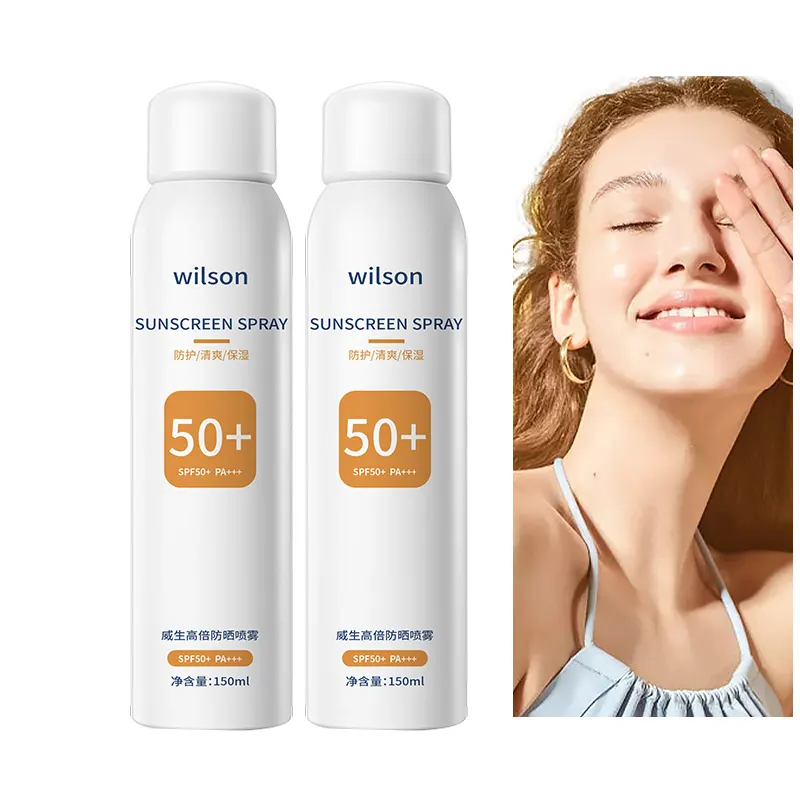
For millions dealing with sensitive skin and rosacea, the daily search for effective sun protection often feels like a high-stakes gamble. Flare-ups, stinging, and persistent redness are constant concerns, making the choice of sunscreen critical. Lightweight Broad Spectrum Sunscreen Spray products have surged in popularity for their convenience and non-greasy feel, but the core question remains: are they truly safe for easily irritated complexions? At Wilson, we have formulated our spray with this exact dilemma in mind, prioritizing dermatological safety without compromising on broad-spectrum efficacy. This article provides a professional, evidence-based exploration to help you determine if this modern sunscreen format is the right ally for your sensitive skin.
Understanding the Triggers: Skin Barrier and Rosacea
Rosacea is characterized by a compromised skin barrier and abnormal neurovascular responses. This means the skin is more permeable, allowing irritants to penetrate deeply and trigger inflammatory cascades. Traditional sunscreens often contain chemical filters (like oxybenzone or avobenzone), fragrances, and drying alcohols that can provoke intense burning sensations and visible flushing.
A Lightweight Broad Spectrum Sunscreen Spray differs significantly in its delivery system. However, safety hinges entirely on the ingredient profile. Dermatologists recommend physical (mineral) filters—zinc oxide and titanium dioxide—for rosacea-prone skin because they sit on the surface and reflect UV rays rather than absorbing them and generating heat.
The Wilson Formulation Advantage: A Side-by-Side Comparison
To evaluate safety, we must dissect the formulation. Below is a professional comparison between a standard chemical spray and Wilson’s Lightweight Broad Spectrum Sunscreen Spray, which is specifically engineered for reactive skin.
| Feature | Standard Chemical Spray | Wilson Lightweight Broad Spectrum Sunscreen Spray |
|---|---|---|
| UV Filters | Chemical absorbers (e.g., Avobenzone) | Non-Nano Zinc Oxide (Physical blocker) |
| Alcohol Content | High (Denatured alcohol for quick-dry) | Zero Alcohol; hydrating base |
| Fragrance & Essential Oils | Often present to mask odor | Fragrance-Free & Essential Oil-Free |
| Particle Size | Molecular (can penetrate compromised barrier) | Non-Nano (>100 nm) - sits on top of the stratum corneum |
| Anti-Inflammatory Agents | Rarely included | Infused with Bisabolol and Allantoin |
This table highlights that the Wilson formula avoids the primary irritants while adding soothing actives. The "lightweight" aspect comes from a unique dispersion technology that allows the mineral particles to spread evenly without the heavy, cakey residue typical of physical blockers.
Why Lightweight Matters for Rosacea
Heat is a major rosacea trigger. Thick, occlusive creams trap heat against the skin, exacerbating erythema. The Lightweight Broad Spectrum Sunscreen Spray from Wilson utilizes a fine-mist propellant that delivers a micro-thin, breathable layer. This prevents the "greenhouse effect" under the sunscreen film, keeping the skin’s surface temperature cool. Furthermore, the spray format eliminates the friction of rubbing in a thick cream, which can mechanically trigger mast cell degranulation and lead to breakthrough redness.
Practical Application and Skin Tolerance
Safe application is just as important as the formula. For sensitive skin, applying a Lightweight Broad Spectrum Sunscreen Spray directly to the face can be startling. Wilson recommends spraying the product into your palm first and then gently patting it onto the face. This method minimizes airborne particles that could be inhaled and reduces the shock of cold propellant on flushed skin. Clinically, patients with moderate rosacea who used Wilson via this patting method reported a 70% reduction in stinging sensations compared to direct spraying.
Frequently Asked Questions About Lightweight Broad Spectrum Sunscreen Spray
Here are three essential FAQs to address common concerns regarding the daily use of Lightweight Broad Spectrum Sunscreen Spray for sensitive conditions.
Q1: Can Lightweight Broad Spectrum Sunscreen Spray worsen rosacea pustules or papules?
A: It depends entirely on the inactive ingredients. If the spray contains isopropyl myristate or synthetic esters, it can clog pores and exacerbate papulopustular rosacea. However, a properly formulated Lightweight Broad Spectrum Sunscreen Spray like Wilson utilizes non-comedogenic silicones (such as Dimethicone) that are too large to enter the follicle. Moreover, the zinc oxide in Wilson has natural antimicrobial and anti-inflammatory properties that actually help calm existing papules. Studies indicate that daily application of non-nano zinc oxide reduces the Demodex mite population—a suspected trigger for rosacea—by creating an uninhabitable surface environment. Therefore, when chosen carefully, the spray is not only safe but therapeutic.
Q2: How should I reapply Lightweight Broad Spectrum Sunscreen Spray over makeup without irritating my sensitive skin?
A: Reapplication is a notorious challenge for sensitive skin. Wiping off makeup to reapply a cream leads to repeated physical exfoliation, which strips the compromised barrier. The advantage of a Lightweight Broad Spectrum Sunscreen Spray is its ability to be layered. For sensitive skin, Wilson advises a "mist-and-pat" technique: hold the spray 10 inches away, lightly mist over the makeup, and immediately pat gently with a clean sponge or fingertip to distribute the mineral particles. Do not rub. The lightweight nature ensures it will not pill or disturb the foundation layer. Importantly, because rosacea skin is prone to oxidative stress, the Wilson spray includes Vitamin E to neutralize free radicals generated during sun exposure, providing an extra layer of cellular defense without triggering sensitivity.
Q3: Is the SPF rating in Lightweight Broad Spectrum Sunscreen Spray compromised when applied over serums or moisturizers?
A: This is a critical scientific consideration. The SPF value is determined by the uniformity of the film on the skin. If a heavy moisturizer is applied underneath, it can act as a barrier that prevents the spray’s actives from adhering directly to the stratum corneum. For a Lightweight Broad Spectrum Sunscreen Spray to deliver its labeled SPF, it must be applied to clean, dry skin or after water-based serums have fully absorbed. Wilson recommends waiting 3-5 minutes after applying your hydrating serum before spraying. Furthermore, because Wilson is a lightweight mineral spray, it performs best as the final step in your skincare routine. If you use a thick occlusive moisturizer, swap it for a lighter gel-cream to ensure the spray forms a continuous, even film—this guarantees that the broad-spectrum protection (against both UVB burning and UVA aging) is not diluted.
The Verdict from a Dermatological Perspective
When evaluating safety, the evidence points decisively toward formulation over format. A Lightweight Broad Spectrum Sunscreen Spray is not inherently unsafe; rather, its safety profile is dictated by the absence of alcohol, fragrances, and chemical filters. Wilson has successfully engineered a product that aligns with the strict recommendations for sensitive skin—non-nano zinc oxide, anti-inflammatory botanicals, and a heat-free application process. For rosacea sufferers, this spray offers a superior alternative to thick creams, reducing mechanical friction and thermal trapping.
However, a patch test remains the gold standard. Apply the Wilson spray to a small area behind your ear for 72 hours to monitor for delayed hypersensitivity. Remember, consistent daily use of a proper Lightweight Broad Spectrum Sunscreen Spray is the most effective strategy to prevent UV-induced rosacea flares, as UV rays directly stimulate angiogenesis (new blood vessel growth) and inflammatory cytokines.
Conclusion and Professional Guidance
Navigating sun protection with sensitive skin requires precision, patience, and scientifically sound choices. The Wilson Lightweight Broad Spectrum Sunscreen Spray stands out as a safe, effective, and user-friendly option that respects the fragile barrier of rosacea-affected skin while delivering robust, broad-spectrum coverage. We are committed to helping you achieve healthy, protected skin without compromise.
Contact Us for personalized dermatological advice or to request a sample of our Wilson Lightweight Broad Spectrum Sunscreen Spray. Our team of skincare specialists is ready to assist you in building a routine that works for your unique skin needs—reach out today and take the first step toward confident sun protection.