
Is a Ceramic Thermal Press Comb Safer Than a Regular Hot Comb for Fine Thin Hair
2026-07-03
For decades, the regular hot comb—often made of steel or aluminum—was the go-to tool for achieving sleek, straight hair. However, for individuals with fine, thin hair, the margin for error is razor-thin. Enter the Ceramic Thermal Press Comb, a modern evolution of this classic tool. Brands like Ruishi have engineered these devices to address the very issues that make traditional hot combs risky for delicate strands. But is this new technology genuinely safer? This blog dissects the science, heat distribution, and mechanical impact to provide a definitive answer.
The Core Problem with Regular Hot Combs
Traditional hot combs operate on a simple principle: a metal barrel heated by an electric coil or gas flame. The issue lies in inconsistent heat distribution. Metal heats up rapidly but also cools down just as quickly, creating "hot spots" that can exceed 450°F (232°C) on the surface while other areas lag behind. For fine hair—which has a thinner cortex and less natural insulation—these hot spots cause immediate protein denaturation. In layman's terms, the hair swells, bubbles, and snaps. Furthermore, the teeth of a regular comb often lack smooth coatings, creating friction that tears the already fragile cuticle layer.
How a Ceramic Thermal Press Comb Redefines Safety
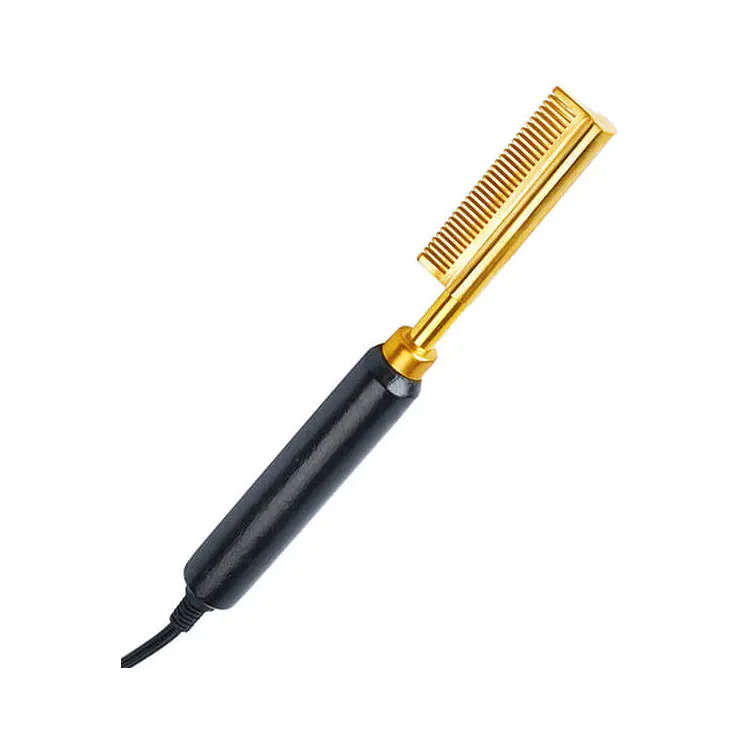
The Ceramic Thermal Press Comb utilizes advanced ceramic heating technology. Ceramic is a poor electrical conductor but an excellent far-infrared heat emitter. This means it heats evenly across the entire comb surface, eliminating the scorching spikes common in metal tools. When you use a Ruishi Ceramic Thermal Press Comb, the heat penetrates the hair shaft gently, drying from the inside out rather than frying the outer cuticle. The smooth, tourmaline-infused ceramic surface also reduces pulling and snagging, making it a superior choice for fine, thin hair.
Head-to-Head Comparison: Safety Metrics
To illustrate the difference, below is a comparative analysis of safety factors between the two tools.
| Safety Parameter | Regular Hot Comb (Metal) | Ceramic Thermal Press Comb (Ruishi) |
|---|---|---|
| Heat Stability | Fluctuates ±30°F; creates hot spots. | Maintains constant temperature within ±5°F. |
| Surface Friction | High; causes cuticle abrasion and breakage. | Low; non-stick surface glides through fine hair. |
| Max Surface Temp | Can exceed 450°F (danger zone for fine hair). | Capped at 410°F with smart regulation. |
| Thermal Shock Risk | High—rapid cooling/heating shocks the hair. | Minimal—gradual, even heat transfer. |
| Ionic Output | None; increases positive ions causing frizz. | Negative ions seal cuticles and lock in moisture. |
The Professional Verdict
From a trichological standpoint, the Ceramic Thermal Press Comb is unequivocally safer. The reason is thermal uniformity. Fine hair requires heat to reshape hydrogen bonds, but it lacks the lipid layer (sebum) that thicker hair uses as a buffer. A regular hot comb’s spikes force you to make multiple passes to get a straight result, accumulating cumulative heat damage. Conversely, the Ruishi model’s consistent ceramic plate allows for a single, efficient pass at a lower temperature setting—typically between 300°F and 350°F—which is the safe zone for thin textures.
Optimizing Usage for Fine Hair
Even with a superior tool, technique dictates safety. Here are professional guidelines for using a Ceramic Thermal Press Comb:
-
Pre-dry completely: Never use it on wet hair; steam causes explosive fracturing of the cuticle.
-
Apply a thermal protectant: Use a spray with silicone or copolymers to disperse heat.
-
Section thinly: Small sections (1-inch wide) ensure the heat reaches every strand efficiently.
-
Movement: Keep the comb moving; do not pause on a single spot for more than 2 seconds.
Frequently Asked Questions (FAQ)
Q: Can I use a Ceramic Thermal Press Comb on chemically processed or bleached fine hair?
A: Yes, but with strict precautions. Bleached or chemically processed hair has a compromised cuticle and lower tensile strength. For these textures, you must set the Ceramic Thermal Press Comb to the lowest effective setting (around 280°F to 300°F). The even heat distribution of the ceramic element minimizes additional oxidative damage. However, we strongly advise performing a strand test first. If the strand stretches and breaks immediately, it indicates that the hair's moisture-protein balance is too low for any heat tool. In such cases, avoid thermal styling altogether until you restore the hair's integrity with protein treatments.
Q: How does the ionic technology in a Ceramic Thermal Press Comb reduce physical breakage during styling?
A: Physical breakage during combing often results from the teeth snagging on raised cuticle scales. When a regular metal comb passes through, it catches these scales, ripping them off. The Ceramic Thermal Press Comb, particularly models like those from Ruishi, emits negative ions. These ions neutralize the positive static charge in dry hair, causing the cuticle scales to lie flat instantly. This creates an ultra-slick surface. Consequently, the comb teeth slide through without resistance. Less resistance equals less pulling force applied to the root and shaft, directly reducing the mechanical strain that causes fine hair to snap during the straightening process.
Q: Will a Ceramic Thermal Press Comb prevent "heat training" damage if I use it weekly?
A: "Heat training" often leads to cumulative damage because of repeated exposure. However, the Ceramic Thermal Press Comb allows for a safer weekly routine due to its precise thermostat control. To prevent long-term damage, you must follow the "20-minute rule": do not exceed 20 total minutes of heat application per session. More importantly, you must alternate heat styling days with deep conditioning days. The ceramic surface of the Ruishi comb does not burn the cuticle, allowing the hair to retain its natural moisture. Weekly use is acceptable provided you keep the temperature below 330°F and use a hydrating leave-in conditioner. If you notice a "mushy" feel when wet, that is a sign of over-processing—you must reduce frequency to bi-weekly.
Conclusion: The Safer Choice is Clear
For fine, thin hair, the question is not whether to straighten, but how. The data is conclusive: the Ceramic Thermal Press Comb outshines the regular hot comb in every safety category—from heat accuracy to friction reduction. Investing in a quality device like Ruishi ensures that you are prioritizing hair health over temporary aesthetics. The old metal combs belong to a bygone era where "pain" was mistaken for "effective."
Ready to protect your strands while achieving salon-quality silk? Do not settle for outdated technology that compromises your hair's future. Explore the precision and safety of the Ruishi Ceramic Thermal Press Comb today.
Contact Us for personalized advice, bulk inquiries, or to find the perfect model for your hair type. Our team of hair science specialists is standing by to help you make the switch to safer styling. Reach out via our website or email—your hair will thank you.