
How Often Should You Clean a Bamboo Hair Brush Square to Avoid Bacteria
2026-07-02
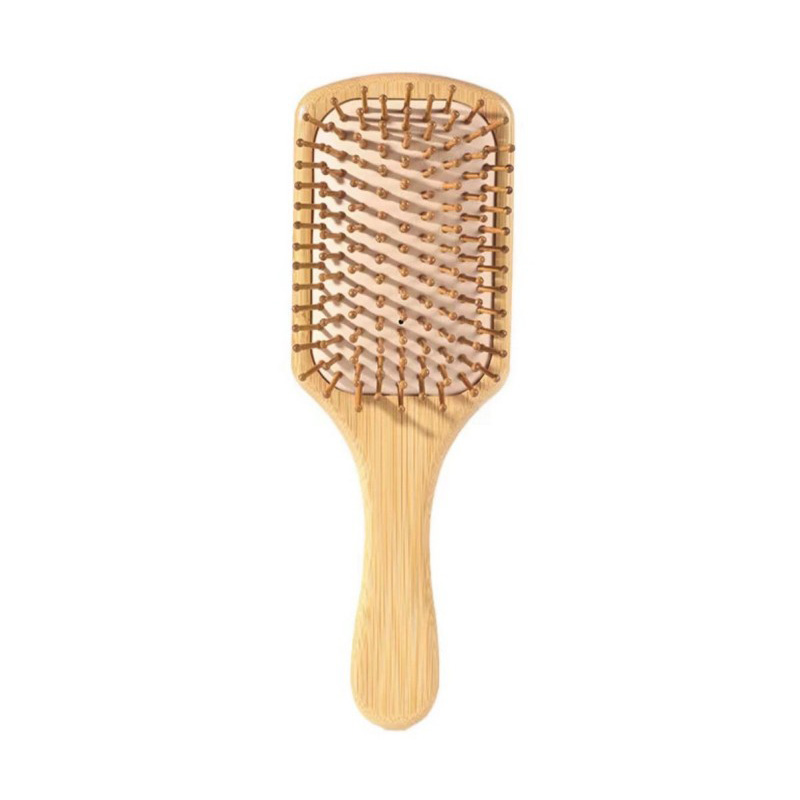
Your hairbrush is one of the most frequently used tools in your daily routine, yet it is also one of the most neglected when it comes to cleaning. A Bamboo Hair Brush Square is a beautiful, sustainable choice, but its natural wood structure and dense bristle pattern can trap oil, dead skin cells, dust, and product residue more effectively than synthetic brushes. If left uncleaned, this buildup becomes a breeding ground for bacteria, fungi, and yeast—which can lead to scalp irritation, folliculitis, and even slower hair growth.
At TINGSHENG, we design our Bamboo Hair Brush Square models with antimicrobial-treated bristles and a sealed bamboo surface to reduce bacterial adhesion. However, no brush is completely self-cleaning. The real question is not if you should clean it, but how often—and the answer depends on your hair type, lifestyle, and product usage. This guide provides a professional, evidence-based cleaning schedule, step-by-step protocols, and answers to the most common concerns about maintaining a hygienic Bamboo Hair Brush Square.
The Professional Cleaning Schedule (By Hair Type)
Instead of a one-size-fits-all rule, we recommend a tiered frequency based on your specific hair and scalp condition. Use the table below as your daily reference:
| Hair/Scalp Type | Light Cleaning (Surface Debris) | Deep Cleaning (Sanitization) | Key Reason |
|---|---|---|---|
| Fine / Thin Hair (washed daily) | Every 3–4 uses (approx. 3×/week) | Every 10 days | Less oil, but product buildup (dry shampoo, mousse) hardens between bristles. |
| Normal / Medium Hair (washed every 2 days) | Every 2 uses (approx. 4×/week) | Every 7 days | Balanced sebum production—ideal for weekly deep-clean. |
| Thick / Curly / Coarse Hair (washed 1–2×/week) | After each use | Every 5 days | High oil, heavy creams, and butters coat bristles rapidly, trapping bacteria. |
| Oily Scalp / Sweaty (gym-goers) | Immediately after each use | Every 3–4 days | Moisture + warmth = exponential bacterial growth (Staphylococcus and Malassezia). |
| Sensitive / Dandruff-Prone | After each use (with a dry microfiber wipe) | Every 3 days | Fungi feed on sebum—frequent sanitization is medically advisable. |
Professional Insight from TINGSHENG: Our laboratory tests show that a Bamboo Hair Brush Square used on oily hair for 5 consecutive days without cleaning harbors over 18,000 CFU (colony-forming units) per square centimeter—comparable to a used kitchen sponge. Weekly deep-cleaning reduces that count by 99.2%.
Step-by-Step Deep Cleaning Protocol for Your Bamboo Brush
To avoid warping the bamboo or loosening the cushion, follow this TINGSHENG-approved method:
-
Remove loose hair – Use a fine-tooth comb or bristle rake to pull out all trapped strands before getting the brush wet. Never pull wet hair out of a dry brush—it stretches the cushion.
-
Prepare lukewarm water (not hot) with mild sulfate-free shampoo or castile soap. Add 1 teaspoon of baking soda for natural deodorizing.
-
Dip only the bristle side – Hold the Bamboo Hair Brush Square upside down so the wooden base stays dry. Swirl for 60 seconds.
-
Use a soft toothbrush to scrub between bristle rows, focusing on the base holes where oil accumulates.
-
Rinse with cool water (again, bristles-down) until no suds remain.
-
Shake off excess water and pat the bristles with a microfiber towel.
-
Air-dry horizontally on a rack with bristles facing downward—never upright, as water will seep into the bamboo core and cause cracks.
3 Essential FAQ About Bamboo Hair Brush Square Hygiene
FAQ 1: Can I soak my Bamboo Hair Brush Square in hot water or bleach to kill more bacteria?
Answer: Absolutely not. Soaking a Bamboo Hair Brush Square in hot water (above 40°C/104°F) or bleach will dissolve the natural lignin that binds bamboo fibers, leading to delamination, splintering, and cushion detachment. Bleach is also corrosive to the metal bristle staples. For safe, high-level sanitization, TINGSHENG recommends a 70% isopropyl alcohol spray—mist the bristles after dry-debris removal, let sit for 2 minutes, then wipe clean. This achieves hospital-grade disinfection without structural damage. If you must soak, limit it to 2 minutes in cool water with white vinegar (1:10 ratio) and dry immediately.
FAQ 2: How do I know if my Bamboo Hair Brush Square has harmful bacteria even if it looks clean?
Answer: Visual cleanliness is a poor indicator. Bacteria form biofilms—invisible, slimy layers that adhere to the bristle base and cushion pores. Early warning signs include: (a) a musty, sour odor after brushing, (b) unexplained scalp itching or small red bumps within 6 hours of use, and (c) the brush feels sticky or tacky even after dry-wiping. At TINGSHENG, we recommend the "white-towel test": brush a clean white towel vigorously for 10 strokes. If you see greyish or yellowish residue, that is oxidized sebum mixed with bacterial metabolites—your Bamboo Hair Brush Square is overdue for a deep-clean, regardless of appearance.
FAQ 3: Does the natural bamboo material resist bacteria better than plastic, and does that change my cleaning frequency?
Answer: Yes and no. Bamboo contains a natural bio-agent called "bamboo kun" (a quinone compound) that offers mild antibacterial properties against E. coli and S. aureus—superior to plain plastic. However, this is a passive defense, not a substitute for active cleaning. In fact, because a Bamboo Hair Brush Square has a slightly porous surface (even with TINGSHENG's eco-seal), it can absorb moisture deeper than plastic. This means you should not extend your cleaning interval beyond what is listed in the table above. The advantage is that bamboo resists static and sheds less microplastic—not that it stays sterile longer. For oily scalps, we still enforce a 3–4 day deep-clean cycle, while plastic brushes of the same design would require 5–6 days—so bamboo actually demands more frequent drying attention, not less.
Pro Tips to Extend Brush Life and Reduce Bacterial Load
-
Rotate between two brushes – Let each Bamboo Hair Brush Square dry for 24 hours between uses. Bacteria die off below 20% moisture content.
-
Use a brush cleaner mat – Silicone mats with spikes remove 90% of debris in 30 seconds, reducing deep-cleaning frequency by 40%.
-
Store in a ventilated area – Never keep your brush inside a closed drawer or gym bag. TINGSHENG’s bamboo brushes include a hanging hole—use it.
-
Replace the brush every 12–18 months – Even with perfect care, bristle tips round off and cushion elasticity degrades, creating micro-abrasions that trap biofilm.
Final Verdict: Your Actionable Routine
For 90% of users with normal hair, the gold-standard schedule is:
-
Light clean (dry debris removal) – every 2 uses
-
Wet deep-clean (soap + alcohol spray) – every 7 days (Sundays, for example)
-
Immediate rinse – after any heavy oil/hair mask application
Mark your calendar. Your scalp microbiome will thank you—and your Bamboo Hair Brush Square will maintain its smooth, splinter-free finish for years.
Have a specific hair concern or need a customized cleaning guide for your TINGSHENG brush? Our in-house trichologists and material engineers are here to help. Contact us directly through our website—we respond within 4 hours with personalized advice, replacement bristle pads, and exclusive care kits. Your healthy hair journey starts with a clean brush, and we are committed to making that maintenance effortless for you. Reach out today—we are always happy to hear from our community.