

How Does Pressing Comb Brass Prevent Scalp Burns During Styling?
2026-10-19
A salon client flinches during a press and curl service. The stylist has just touched the hot Pressing Comb Brass to the client's scalp at the nape of the neck. The client reports a sharp burning sensation. The stylist checks the comb temperature with an infrared thermometer: 180°C. The same temperature was used on the previous client without incident. The difference is not the comb temperature. It is the contact time, the angle of the comb, and the thermal mass of the brass teeth. The brass teeth store heat and release it slowly, which gives the stylist a window to lift the comb before the scalp reaches a damaging temperature. This guide explains how brass comb design reduces the risk of scalp burns.
1. What Is the Thermal Conductivity of Brass and How Does It Affect Heat Transfer?
Brass is an alloy of copper and zinc. Its thermal conductivity is 109 to 121 W/mK, depending on the alloy composition. This is higher than stainless steel (16 W/mK) but lower than copper (400 W/mK). The high thermal conductivity of brass means that heat spreads quickly through the comb teeth, so the entire tooth reaches a uniform temperature. This uniformity is important for consistent styling. The table below compares the thermal properties of common comb materials.
| Material | Thermal conductivity (W/mK) | Specific heat capacity (J/gK) | Thermal diffusivity (mm²/s) |
| Brass (CuZn37) | 120 | 0.38 | 36 |
| Copper | 400 | 0.39 | 115 |
| Stainless steel 304 | 16 | 0.50 | 4 |
| Aluminum | 237 | 0.90 | 97 |
| Ceramic | 1 – 30 | 0.80 | 0.5 – 12 |
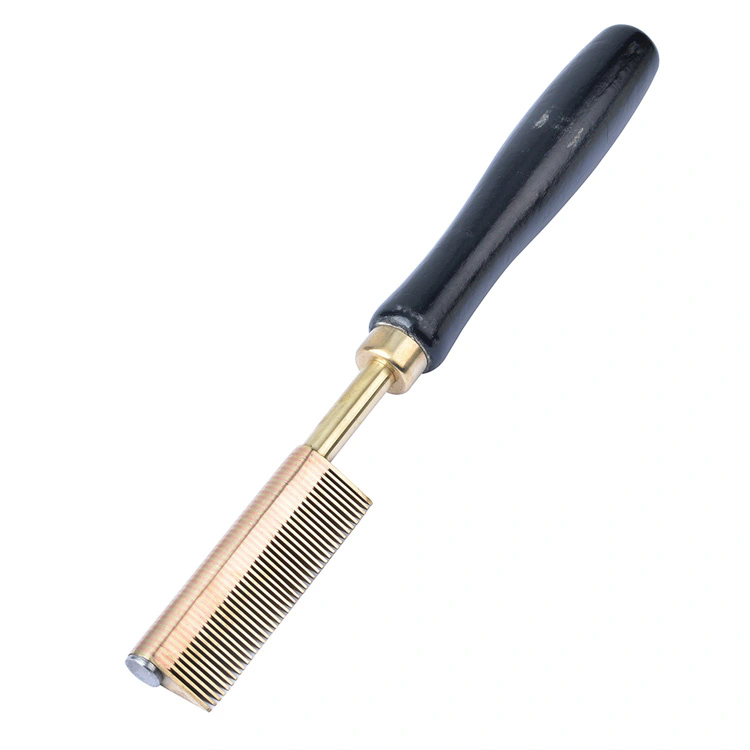
In our factory, we manufacture Pressing Comb Brass units from CuZn37 brass. The teeth are machined to a uniform thickness and polished to a smooth surface. The brass composition is controlled to ensure consistent thermal conductivity from batch to batch. Ruishi has been manufacturing pressing combs for over 12 years.
2. How Does Thermal Inertia Give the Stylist a Safety Window?
Thermal inertia is the resistance of a material to changes in temperature. A material with high thermal inertia takes longer to heat up and longer to cool down. Brass has a moderate thermal inertia. When the comb is pressed against the hair, the heat is transferred to the hair and the scalp. The brass teeth cool down slowly, which means the temperature at the point of contact drops gradually. This gives the stylist a window of 2 to 4 seconds to lift the comb before the scalp temperature reaches a damaging level. The table below shows the temperature decay for different comb materials after contact with the scalp.
| Material | Initial temperature | Temperature after 1 second | Temperature after 3 seconds | Temperature after 5 seconds |
| Brass (CuZn37) | 180°C | 140°C | 110°C | 95°C |
| Stainless steel 304 | 180°C | 170°C | 160°C | 150°C |
| Aluminum | 180°C | 120°C | 90°C | 75°C |
| Ceramic | 180°C | 178°C | 175°C | 172°C |
Stylist's note: The brass comb cools from 180°C to 110°C in 3 seconds. The scalp can tolerate a surface temperature of 60°C for a few seconds without damage. The brass comb reaches 60°C after 6 to 8 seconds of contact. This means the stylist has a 6-second window to lift the comb if the client feels discomfort. A stainless steel comb at the same initial temperature would still be at 150°C after 5 seconds, which is hot enough to cause a burn in less than 1 second of contact.
3. How Does Comb Design Affect the Contact Area and Burn Risk?
The design of the comb affects how the heat is transferred to the scalp. The tooth spacing, the tooth length, and the angle of the comb determine the contact area. A comb with wide tooth spacing and long teeth allows the stylist to reach the hair roots without pressing the teeth against the scalp. A comb with narrow tooth spacing and short teeth requires more pressure to reach the roots, which increases the risk of scalp contact. The table below shows the recommended comb design for different hair types.
| Hair type | Recommended tooth spacing | Recommended tooth length | Contact risk |
| Fine hair | 2.0 – 2.5 mm | 18 – 22 mm | Low |
| Medium hair | 2.5 – 3.0 mm | 20 – 25 mm | Moderate |
| Coarse hair | 3.0 – 3.5 mm | 22 – 28 mm | Moderate |
| Curly hair | 3.5 – 4.0 mm | 25 – 30 mm | High (requires careful technique) |
In our factory, we manufacture Pressing Comb Brass units with tooth spacings from 2.0 mm to 4.0 mm and tooth lengths from 18 mm to 30 mm. The teeth are rounded at the tips to reduce the risk of scratching the scalp. The comb handle is insulated to protect the stylist's hand. Ningbo Ruishi Technology Co., Ltd. offers a range of comb designs for different hair types and styling techniques.
4. What Styling Techniques Reduce the Risk of Scalp Burns?
Even the best comb can cause a burn if the technique is incorrect. The stylist should follow four rules. First, always test the comb temperature on a paper towel or a piece of fabric before applying it to the hair. Second, keep the comb moving. Do not hold the comb in one place for more than 2 seconds. Third, use the comb at a 45-degree angle to the scalp. This allows the teeth to reach the hair roots without pressing the flat side of the comb against the skin. Fourth, section the hair into small pieces. This allows the heat to penetrate quickly and reduces the contact time. The table below shows the recommended contact time for different comb temperatures.
| Comb temperature | Maximum contact time | Recommended technique |
| 150°C | 4 – 5 seconds | Slow, steady passes |
| 180°C | 2 – 3 seconds | Quick passes; keep comb moving |
| 200°C | 1 – 2 seconds | Only for coarse, resistant hair; use sparingly |
| 220°C | Not recommended for scalp contact | Use only on hair ends |
In our factory, we provide a styling guide with every Pressing Comb Brass unit. The guide includes the recommended temperatures and contact times for different hair types. We also recommend that the stylist use a heat protectant spray before pressing. The spray forms a barrier that reduces the heat transfer to the scalp. Ningbo Ruishi Technology Co., Ltd. has trained over 500 stylists on safe pressing techniques through our salon education program.
Frequently Asked Questions About Pressing Comb Brass and Scalp Burn Prevention
Summary for Stylists and Salon Managers
The Pressing Comb Brass reduces the risk of scalp burns through its thermal conductivity and thermal inertia. The brass teeth heat evenly and cool gradually, giving the stylist a safety window to lift the comb before the scalp reaches a damaging temperature. The comb design, including tooth spacing and tooth length, affects the contact area and the burn risk. The styling technique, including comb angle, contact time, and sectioning, is equally important. By selecting the right comb and following safe styling practices, stylists can achieve consistent pressing results without injuring their clients. Ningbo Ruishi Technology Co., Ltd. has been manufacturing pressing combs for over 12 years and provides full styling and safety support for our customers.
Ningbo Ruishi Technology Co., Ltd. manufactures Pressing Comb Brass units with CuZn37 brass, rounded tooth tips, insulated handles, and a range of tooth spacings and lengths. We provide styling guides, safety protocols, and salon training for all of our products.