

Article Summary
Premade volume fans are pre-shaped lash clusters designed to help professional lash artists create fuller lash extensions without manually forming every fan. The right selection depends on the desired volume, the client's natural lash condition, fiber diameter, curl, length, fan-base structure, and application technique. By matching these factors carefully, technicians can improve workflow efficiency, achieve more consistent styling, and provide a better salon experience. Proper isolation, adhesive control, hygiene, and aftercare remain essential for safe, dependable results.
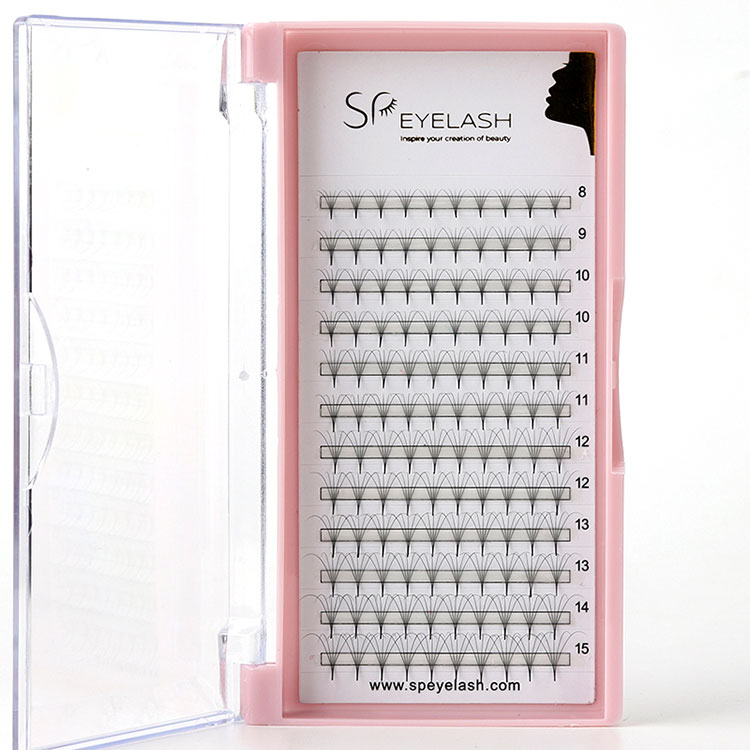
1. What Are Premade Volume Fans?
Premade volume fans are lash extension products in which several fine synthetic lash fibers are arranged into a fan shape before application. Instead of manually separating and arranging individual extensions into a fan during each appointment, a technician can pick up a prepared fan and attach it to an appropriately isolated natural lash.
These products are available in different fan densities, diameters, lengths, curls, and base structures. This variety allows professionals to create soft, textured styles, balanced everyday volume, or more dramatic looks according to client preferences and natural lash capacity.
Many professional options use PBT synthetic fibers and heat-bonded bases. Construction varies by manufacturer, so technicians should check the specifications of each product rather than assuming all premade fans have identical weight, bonding methods, or dimensions.
Premade Fans vs. Handmade Volume Fans
Handmade fans are formed by the technician during the appointment. This approach offers extensive control over fan symmetry, spread, and design, but it requires practice and time. Premade fans arrive already shaped, making them especially useful when application speed and repeatability are priorities.
| Feature | Premade Volume Fans | Handmade Volume Fans |
|---|---|---|
| Fan preparation | Prepared before application | Created during the appointment |
| Application workflow | Can reduce preparation time | Includes fan-making time |
| Shape consistency | Often more uniform within a well-made tray | Depends on technician skill and technique |
| Design flexibility | Depends on available fan specifications | Allows extensive customization |
| Skill requirements | Still requires professional isolation and placement | Requires fan-making and application skills |
| Best suited for | Efficiency and repeatable fan shapes | Customized fans and advanced artistic control |
Neither method automatically produces better retention or healthier natural lashes. Results depend on product construction, suitable weight selection, application technique, adhesive compatibility, and appropriate maintenance.
2. Why Do Lash Artists Use Premade Volume Fans?
For salons, every appointment involves balancing quality, client comfort, scheduling, and profitability. Premade fans can help address several common workflow challenges when selected and applied correctly.
Because the fans are already formed, technicians can spend less time creating individual fans and more time isolating lashes, planning styling, and applying extensions accurately.
Uniformly manufactured fans can help reduce variations in spread and appearance across a set, supporting a more balanced finish.
Prepared fans remove the fan-making step, allowing qualified technicians to concentrate on isolation, placement, adhesive control, and styling fundamentals.
Clearly labeled trays help salons organize their most-used lengths, curls, diameters, and fan densities for common services.
Efficiency Should Never Replace Precision
Ready-made fans are not a shortcut around professional technique. Each fan must still be matched to an individual natural lash, attached with appropriate adhesive control, and positioned without touching the skin. Poor isolation or an excessively heavy fan can cause discomfort and damage regardless of how quickly the service is completed.
The most effective workflow combines prepared products with careful consultation, consistent application standards, and a final inspection of the entire lash line.
3. How Do Fan Density, Diameter, Curl, and Length Affect the Result?
Choosing a premade volume fan involves more than selecting the number of fibers in each cluster. Several specifications work together to determine appearance, weight, attachment, and suitability for a particular natural lash.
Fan Density: Understanding 3D, 5D, 8D, and Beyond
The number before the letter D indicates how many individual lash fibers are arranged in a fan. For example, a 3D fan contains three fibers, while an 8D fan contains eight. A higher D number generally creates a fuller appearance when other factors are comparable, but it does not automatically mean the fan is heavier or more suitable for every client.
- 2D–3D: Useful for subtle, lightly textured volume when the chosen specifications suit the natural lashes.
- 4D–6D: Common options for balanced volume styles and soft fullness.
- 7D–10D: Can create a denser, more noticeable effect when fiber diameter and total weight are appropriate.
- Higher-density fans: Require particular attention to individual fiber diameter, total fan weight, base construction, and natural lash strength.
These ranges are general styling references, not universal weight or safety categories. Two fans with the same D number may differ considerably in total mass because their fiber diameters and lengths differ.
Fiber Diameter: A Critical Selection Factor
Diameter describes the thickness of an individual extension fiber, often expressed in millimeters. Common product specifications include 0.03 mm, 0.05 mm, and 0.07 mm, although availability varies by fan style.
Finer fibers can allow multiple strands to form a comparatively lightweight fan. However, technicians should evaluate the actual construction and overall fan weight rather than relying on diameter alone. The appropriate combination depends on the client's natural lashes, desired result, and professional assessment.
Curl: Defining the Direction of the Look
Curl influences how lifted the extensions appear from the front and side. J and B curls tend to offer a softer lift, C and CC curls create a more noticeable curve, and D or DD curls provide a stronger lifted appearance. L-type curls have a distinctive straighter base with a pronounced lift.
Curl labels and geometry can vary among manufacturers. When switching suppliers, test the actual product rather than assuming two identically labeled curls will look exactly the same.
Length: Creating a Balanced Lash Map
Lengths commonly range from shorter inner-corner options to longer fibers for selected areas of the lash line. Mixed-length trays can help technicians create graduated maps without purchasing every size separately.
Longer extensions create additional leverage on the natural lash and may increase mechanical stress. A dramatic look should therefore be planned around natural lash strength and client comfort rather than length alone.
| Specification | What It Influences | What to Check |
|---|---|---|
| D number | Number of fibers and potential fullness | Total fan weight and desired density |
| Diameter | Individual fiber thickness | Suitability for the chosen fan density |
| Curl | Lift and visual direction | Natural lash angle and desired styling |
| Length | Overall shape and visual impact | Natural lash strength and placement area |
| Base design | Pickup, attachment, and root appearance | Base width, stem shape, and adhesive compatibility |
| Fiber material | Texture, finish, and flexibility | Manufacturer specifications and consistency |
4. How Can You Choose the Right Premade Volume Fans?
The best product is the one that supports your intended styling while meeting practical requirements for application, comfort, consistency, and cost. A systematic selection process can help salons avoid buying trays that do not fit their most common services.
Step 1: Identify Your Main Customer Needs
Review the styles your clients request most often. Some prefer a natural enhancement, while others want textured volume or a more dramatic appearance. Choose your initial fan densities and curls around those services instead of purchasing every available specification at once.
Step 2: Review the Complete Specifications
Check the fiber material, available diameters, fan densities, curl options, length range, tray quantity, and base construction. Confirm whether the listed dimensions refer to individual fibers or the overall product and whether mixed trays contain the sizes your salon actually needs.
Step 3: Assess Pickup and Attachment
A fan should be easy to pick up with appropriate tweezers without the fibers separating or the base becoming distorted. Its base should work with your application method and chosen adhesive. If possible, request samples before committing to a large order.
Step 4: Evaluate Consistency Between Trays
Check whether the fans maintain consistent spacing, shape, length, curl, and base quality. For a salon or reseller, reliable consistency is especially important because noticeable variations can make repeat appointments and inventory planning more difficult.
Step 5: Calculate the Real Cost per Usable Fan
A lower tray price does not always represent better value. Compare the number of usable fans, the frequency of damaged or unsuitable pieces, the time required for application, and the amount of unused inventory left after a service cycle.
Explore the SP EYELASH Premade Volume Fans collection to review available options and compare the specifications relevant to your salon or distribution business.
5. How Should You Apply Premade Volume Fans for Consistent Results?
Good application begins before the fan is picked up. The following workflow outlines important professional considerations for a clean, controlled service. Always follow your training, the adhesive manufacturer's instructions, and applicable local requirements.
-
Consult the client and assess natural lashes.
Discuss the desired style, existing extensions, sensitivities, and relevant eye-area concerns. Assess natural lash length and strength before selecting the fan density, diameter, and extension length.
-
Prepare a clean work area.
Wash hands, disinfect reusable tools according to their instructions, and use clean disposable supplies where appropriate. Arrange the lash trays, tweezers, adhesive, and under-eye protection within easy reach.
-
Clean and isolate the natural lashes.
Remove makeup, oils, and residue using products suitable for lash extension preparation. Position eye pads and tape carefully so the client's eyes can remain comfortably closed and the lower lashes are separated from the upper lash line.
-
Pick up the fan by its base.
Use suitable tweezers to grasp the fan gently near the root. Avoid squeezing the middle or upper portion, which may distort the fan or cause the fibers to separate.
-
Control the adhesive amount.
Follow the adhesive manufacturer's guidance for room conditions, working time, and application. Use an appropriate amount on the base without creating an unnecessarily large adhesive bead.
-
Attach the fan to one isolated natural lash.
Place the fan using the attachment method appropriate for its base design. Maintain a suitable distance from the skin, prevent neighboring natural lashes from sticking together, and avoid placing excessive weight on a weak lash.
-
Repeat with a balanced lash map.
Work methodically across the lash line, checking the distribution of lengths and curls. Consistent placement is more important than applying the highest possible number of fans.
-
Inspect the completed set.
Check isolation, direction, symmetry, adhesive buildup, and comfort. Separate any unintended bonds and address any visible placement problems before completing the service.
6. What Common Problems Can Affect Premade Volume Fan Applications?
Even high-quality fans may produce disappointing results when product specifications and application techniques are poorly matched. Recognizing the cause of a problem is the first step toward improving service consistency.
Problem 1: Fans Separate During Pickup
Possible causes: Gripping the wrong part of the fan, applying excessive pressure, or using a product with inconsistent base construction.
Practical solution: Adjust the tweezer grip and pickup angle, handle fans gently, and test new trays before using them in a full appointment. If separation persists, contact the supplier about product consistency.
Problem 2: The Lash Line Looks Uneven
Possible causes: Inconsistent lengths, irregular direction, poor mapping, or differences in fan placement.
Practical solution: Plan a lash map before application, keep similar fans grouped together, and inspect symmetry from multiple viewing angles during the service.
Problem 3: Extensions Do Not Retain Well
Possible causes: Inadequate preparation, poor isolation, incompatible adhesive conditions, insufficient contact, or inappropriate aftercare.
Practical solution: Review preparation, adhesive freshness, humidity and temperature requirements, pickup technique, and placement. Check the manufacturer's recommendations rather than assuming the fan itself is always responsible.
Problem 4: The Finished Set Feels Too Heavy
Possible causes: Excessive fan weight, fibers that are too thick or long for the natural lashes, or a density that does not suit the client's lash condition.
Practical solution: Reassess the complete fan specification, including fiber diameter and length. Select a lighter combination appropriate for the natural lashes instead of relying solely on the D number.
Problem 5: Adhesive Buildup Creates a Bulky Base
Possible causes: Dipping too much of the fan into adhesive, inconsistent adhesive control, or a base design that does not suit the technician's technique.
Practical solution: Practice controlled pickup and adhesive use, inspect the base before attachment, and compare alternative base styles if the problem continues.
7. How Can You Improve Retention and Maintain Premade Volume Fans?
Retention depends on several factors working together. The fan must be suitable for the natural lash, the adhesive must be used within its recommended conditions, and the client must follow appropriate aftercare instructions.
Control the Application Environment
Temperature and humidity can influence the behavior of lash adhesives. Use a hygrometer where appropriate, follow the adhesive manufacturer's recommended working range, and store the adhesive as instructed. Replace products that are expired, contaminated, or no longer performing consistently.
Keep the Natural Lash Clean
Oil, makeup residue, and debris can interfere with preparation and application. Use suitable cleansing products before treatment and explain how clients can clean their extensions gently after the service, following the product and adhesive guidance.
Choose a Suitable Attachment Method
The fan base, natural lash direction, adhesive properties, and technician's technique must work together. An attachment that looks secure initially may still have poor contact or excessive adhesive. Regularly review placement and isolation rather than judging quality only by the immediate finished appearance.
Store Unused Trays Properly
- Keep trays clean, covered, and protected from dust.
- Store them in a cool, dry environment away from direct sunlight and excessive heat.
- Avoid bending strips or crushing fans under heavy packaging.
- Organize trays by curl, length, diameter, and density to prevent selection errors.
- Use stock rotation and inspect products before each service.
Give Clients Clear Aftercare Instructions
Explain how to clean and handle extensions, discourage rubbing or pulling, and recommend maintenance intervals appropriate to natural lash growth and the condition of the set. Clients should contact a qualified professional if extensions become uncomfortable, tangled, or unusually irritating.
8. How Can Premade Volume Fans Support Lash Business Growth?
For salon owners, lash educators, wholesalers, and beauty brands, product selection affects more than the finished look. It also influences appointment scheduling, staff training, inventory costs, and customer satisfaction.
Build a Practical Product Range
Start with the densities, diameters, curls, and lengths that match your core services. Monitor which products are used most frequently, then expand the range in response to real demand. This approach helps reduce slow-moving stock and unnecessary purchasing.
Measure Productivity Beyond Appointment Speed
Faster fan preparation can help improve scheduling, but overall efficiency also depends on consultation, isolation, placement, and correction time. Track total service duration, product consumption, client feedback, and retention-related complaints to identify where improvements are needed.
Evaluate Suppliers for Long-Term Reliability
When purchasing wholesale, assess product consistency, communication, packaging quality, production capacity, and delivery performance. Ask for clear product specifications and samples so your team can evaluate pickup behavior, fan symmetry, and application compatibility.
Consider Private Label and Custom Packaging
Beauty brands may benefit from packaging that reflects their positioning and helps customers identify the correct specifications quickly. Depending on the supplier's capabilities, customization may include brand logos, tray labels, box designs, and coordinated product assortments.
SP EYELASH offers a product range for businesses and professionals exploring lash extension supplies. Review the available product details and discuss your requirements with the supplier before placing a wholesale or customized order.
9. Frequently Asked Questions About Premade Volume Fans
Q1. What are premade volume fans used for?
Premade volume fans are used by trained lash artists to create fuller eyelash extension sets. Each fan contains multiple pre-arranged lash fibers, allowing the technician to skip manual fan formation and focus on isolation, attachment, and styling.
Q2. Are premade volume fans suitable for beginners?
They can simplify the fan-making portion of the process, but beginners still need proper training in lash isolation, adhesive handling, natural lash assessment, and safe placement. Using premade fans does not eliminate the need for professional technique.
Q3. What is the difference between 3D and 8D premade fans?
A 3D fan contains three lash fibers, whereas an 8D fan contains eight. The higher-density fan can produce a fuller appearance, but its suitability depends on individual fiber diameter, length, total weight, and the condition of the natural lash.
Q4. Which diameter is best for premade volume fans?
There is no single best diameter for every application. Options such as 0.03 mm, 0.05 mm, and 0.07 mm have different characteristics. Choose a specification that provides an appropriate overall fan weight and meets the intended styling requirements.
Q5. Do premade volume fans save application time?
They can save time because technicians do not need to construct every fan during the service. The actual time saved varies according to application experience, fan pickup behavior, lash mapping, and the complexity of the desired style.
Q6. Are heat-bonded fans different from glue-bonded fans?
Yes. The terms describe different approaches to securing fibers at the fan base. Product construction affects base appearance, flexibility, pickup, and application behavior. Ask the manufacturer to confirm the bonding method and evaluate samples before purchasing.
Q7. Why do premade fans sometimes fall apart during application?
Possible reasons include excessive tweezer pressure, gripping the wrong part of the fan, or inconsistent product construction. Try adjusting the pickup technique and inspect the tray. Persistent separation may indicate a quality issue that should be discussed with the supplier.
Q8. Can premade volume fans be used for hybrid lash sets?
Yes. Premade fans can be combined with suitable individual extensions to create a hybrid effect. The technician can adjust the balance of volume and individual lashes according to the desired texture, lash map, and natural lash condition.
Q9. How should premade volume fans be stored?
Keep them in their original trays or suitable protective packaging in a clean, dry location away from direct sunlight, excessive heat, and dust. Protect the fans from crushing and follow the supplier's storage recommendations.
Q10. What should wholesalers check before placing a bulk order?
Review material, density, diameter, curl, length, tray quantity, packaging, consistency, sample availability, minimum order quantities, lead times, and customization options. Confirm the commercial terms and quality expectations with the supplier before production begins.
Q11. How can lash artists choose fans that look natural?
Choose a suitable density, length, and curl for the client's natural lashes and desired style. Use a balanced lash map and avoid excessive weight or length. Natural-looking results depend on the complete design rather than a single product specification.
Q12. Where can I find premade volume fans for professional use?
You can explore the SP EYELASH Premade Volume Fans page to review available options. For wholesale or private-label requirements, contact the company to confirm current specifications, samples, packaging, and order terms.
Find the Right Premade Volume Fans for Your Business
The right premade volume fans can help streamline salon workflows, create consistent lash designs, and support a more organized product range. Success depends on selecting appropriate fan specifications, maintaining professional application standards, and working with a supplier that understands your requirements.
Whether you are a lash technician, salon owner, beauty distributor, or private-label brand, SP EYELASH can be a starting point for exploring premade volume fan options for your business.
Visit our Premade Volume Fans collection to review product options. If you need product specifications, sample information, wholesale pricing, or customized packaging, contact us to discuss your requirements and find a suitable solution for your market.
Contact SP EYELASH