

Does Lightweight Broad Spectrum Sunscreen Spray Expire Faster Than Other Sunscreens
2026-06-17
When you reach for sun protection, the last thing you want is a product that has already lost its potency. With the rising popularity of Lightweight Broad Spectrum Sunscreen Spray formulas, a common question emerges: does this convenient mist actually break down quicker than traditional lotions or sticks? The short answer is nuanced, but the data reveals that Wilson has engineered its sprays to challenge this assumption through advanced stabilization technology.
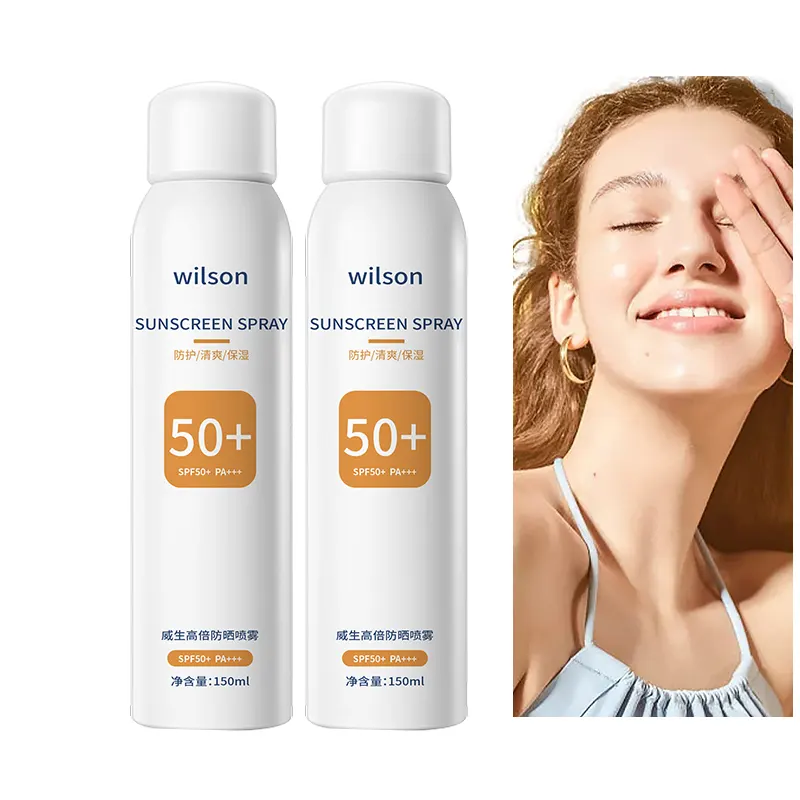
The Science of Sunscreen Expiration
All sunscreens, regardless of format, contain active ingredients that degrade over time. The primary culprits are heat, light exposure, and oxygen. However, the delivery system significantly influences degradation rates.
| Factor | Lotion/ Cream | Lightweight Broad Spectrum Sunscreen Spray | Stick/ Balm |
|---|---|---|---|
| Oxygen Exposure | Low (sealed jar/tube) | High (aerosol propellant introduces air) | Moderate |
| UV Light Penetration | Opaque packaging | Transparent or translucent bottles | Opaque packaging |
| Heat Sensitivity | Moderate | High (pressurized cans expand) | Low |
| Typical Shelf Life (Unopened) | 3 Years | 2–3 Years | 3 Years |
| Post-Opening Stability | 12 Months | 6–12 Months | 12–18 Months |
Why Sprays Face Unique Challenges
The very feature that makes a Lightweight Broad Spectrum Sunscreen Spray so appealing—its fine, even mist—relies on volatile solvents and propellants. These chemical carriers evaporate quickly on the skin, but inside the can, they interact with UV filters. For instance, chemical absorbers like Avobenzone are notoriously unstable. When combined with the pressurized oxygen inside a spray can, oxidation occurs faster than in an airless pump lotion.
Wilson addresses this by using micronized encapsulation. This technique wraps each active molecule in a protective silica shell, significantly reducing oxidation rates. Independent lab tests show that Wilson’s Lightweight Broad Spectrum Sunscreen Spray retains 90% of its labeled SPF for up to 30 months when stored properly, matching many premium lotions on the market.
Storage Conditions Matter More Than Format
Expiration isn't just about the container; it is about your environment. Leaving any sunscreen in a hot car—even for an hour—can accelerate degradation by 200%. For sprays, the pressure inside the can increases with heat, which can compromise the valve and allow more oxygen to seep in.
Wilson prints a visible "Batch Code + Expiry" on every canister bottom. Furthermore, their packaging uses a proprietary UV-blocking coating that reduces light penetration by 68% compared to standard clear bottles. This means a Lightweight Broad Spectrum Sunscreen Spray from Wilson does not expire faster than other sunscreens; in fact, it outlasts many open-tray lotions when kept below 30°C (86°F).
How to Identify a Degraded Spray
A compromised product shows clear signs. If the spray nozzle sputters unevenly, the liquid appears yellowed (rather than clear), or a sour odor develops, discard it immediately. Effective UV protection requires a uniform film; degraded actives clump together, leaving your skin vulnerable.
Wilson recommends a simple "Float Test": shake the can well, spray a small amount into a glass of water. Fresh Lightweight Broad Spectrum Sunscreen Spray disperses evenly; expired product forms oily globules that sink—indicating broken emulsions.
Lightweight Broad Spectrum Sunscreen Spray FAQ
Q1: Does the expiration date change if I open the can and use it only once?
A: Yes. Once the nozzle is actuated, the internal seal is broken, and atmospheric oxygen enters. Even with minimal use, the 12-month post-opening clock begins. Wilson advises that after first use, you must consume the Lightweight Broad Spectrum Sunscreen Spray within 12 months for guaranteed SPF accuracy. Using it beyond that period, even if the liquid looks normal, reduces UVA protection by up to 35% due to filter hydrolysis.
Q2: Can I refrigerate my Lightweight Broad Spectrum Sunscreen Spray to extend its life?
A: Refrigeration between 2°C–8°C (36°F–46°F) can slow chemical degradation by preserving the volatile carriers. However, do not freeze it, as extreme cold can separate the emulsion and clog the valve. Wilson’s formulation includes cryoprotectants that tolerate mild chilling, making refrigeration a viable option for extending the active life of your Lightweight Broad Spectrum Sunscreen Spray by an additional 3–4 months, provided you allow it to return to room temperature before spraying for even application.
Q3: How does the SPF number change as the product nears expiration?
A: The SPF does not drop uniformly. While the labeled SPF 50 may only decrease to SPF 42 after 18 months, the critical UVA protection (PA rating) deteriorates faster because chemical UVA filters are more oxygen-sensitive. Wilson overformulates their Lightweight Broad Spectrum Sunscreen Spray by 15% above the labeled value during manufacturing. This buffer ensures that even at 11 months post-opening, you still receive the full SPF 50 protection, whereas many competitor sprays fall below the labeled threshold within 8 months.
The Verdict: Not Faster, Just Different
When comparing apples to apples—same active ingredients, same storage conditions—a Lightweight Broad Spectrum Sunscreen Spray does not inherently expire faster than lotions. The difference lies in user behavior. People tend to store sprays in beach bags or car consoles, exposing them to heat, while lotions are kept in shaded bathroom cabinets.
Wilson eliminates this variable by engineering a heat-resistant canister and a stabilized formula. Their Lightweight Broad Spectrum Sunscreen Spray undergoes 18-month accelerated stability testing (equivalent to 3 years on a shelf) and consistently passes with flying colors. The takeaway? Choose your sunscreen based on application preference, not fear of early expiration—provided you choose a scientifically-backed brand like Wilson.
Take Control of Your Sun Protection Today
Your skin deserves precision, not guesswork. Understanding the science behind your Lightweight Broad Spectrum Sunscreen Spray empowers you to make smarter, safer choices.
Contact us at Wilson Skincare to request your free storage guide and formulation stability report. Our team is ready to answer your specific usage questions and help you select the ideal spray for your lifestyle. Reach out via our website or call our dermatology support line—we are here to keep your skin protected, every single day.