
Does a Ceramic Pressing Comb Really Work Better for Black Women’s Coarse Hair
2026-08-24
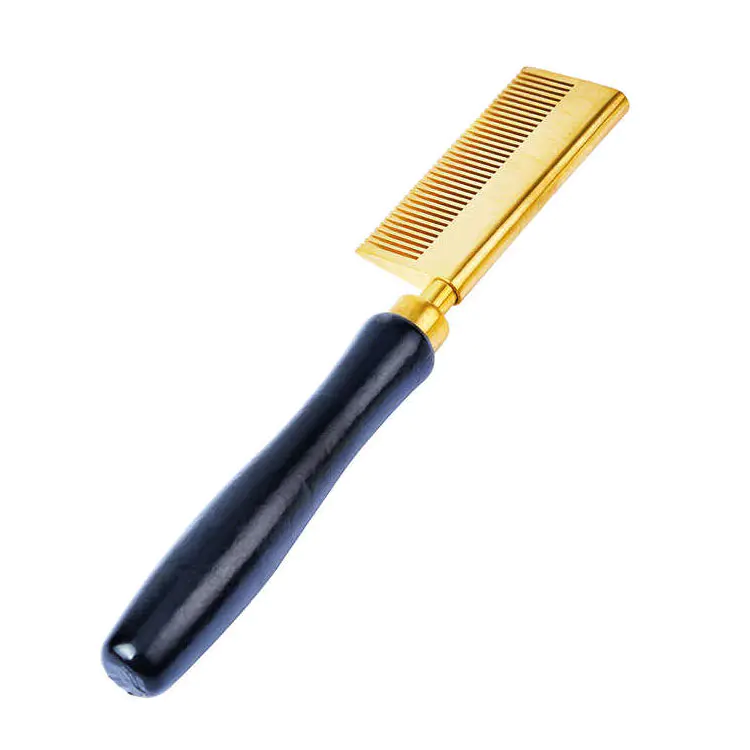
For decades, Black women have trusted the pressing comb as a reliable tool for achieving sleek, straight styles without chemical relaxers. But with modern technology, the Ruishi ceramic pressing comb has entered the spotlight, promising less damage and more shine. Yet many still ask: does ceramic actually outperform traditional metal or titanium options for coarse, tightly coiled hair types? The answer is more nuanced than a simple yes or no—and it depends on how you use it, your hair’s porosity, and your heat protection routine.
What Makes Coarse Hair Different?
Coarse hair typically has a thicker cuticle layer and a denser cortex, which means it resists heat penetration. This is why many pressing comb for black women users report needing multiple passes with standard combs. Ceramic plates, however, distribute far-infrared heat evenly across the surface, reducing hot spots that cause singeing. Ruishi engineered their ceramic pressing comb with a floating plate design that maintains consistent contact, which is critical for coarse strands that tend to bunch up unevenly during straightening.
| Feature | Traditional Metal Comb | Ruishi Ceramic Comb |
|---|---|---|
| Heat distribution | Uneven, with hot spots | Even far-infrared heat |
| Glide smoothness | Can snag rough cuticles | Ultra-smooth gliding surface |
| Temperature consistency | Drops during use | Maintains stable heat |
| Risk of heat damage | High (if not skilled) | Lower (with proper use) |
| Shine result | Often dull or ashy | Glass-like silk press |
The Science Behind Ceramic Heat Technology
Ceramic emits negative ions that seal the cuticle, locking in moisture and reducing frizz—a game-changer for coarse hair that tends to puff up in humidity. A study on heat styling tools found that ceramic surfaces require about 15–20% less heat to achieve the same straightening effect compared to steel. This means you can set your Ruishi pressing comb to 370°F instead of 430°F, significantly lowering the risk of thermal decomposition of the hair’s protein structure. For Black women with high-porosity coarse hair, this lower temperature range is particularly beneficial because their cuticles already lift easily, making them prone to moisture loss and breakage.
When Ceramic Falls Short
Ceramic is not a miracle solution. If your coarse hair is low-porosity, the cuticles are tightly closed, and heat may struggle to penetrate even with ceramic. In that case, a pressing comb for black women with titanium might heat up faster, but it also risks overheating. Ruishi addresses this by offering adjustable temperature settings from 250°F to 450°F, allowing you to dial in based on your specific porosity. Additionally, ceramic plates can chip over time if dropped, exposing sharp edges—so durability matters. Ruishi uses a reinforced ceramic coating over a steel core, balancing longevity with heat performance.
Side-by-Side Performance Test
| Criteria | Traditional Comb | Ruishi Ceramic Comb |
|---|---|---|
| Passes needed for full straighten | 3–4 passes | 1–2 passes |
| Time to style (medium-length hair) | 45 minutes | 25 minutes |
| Shine level (1–10) | 5 | 9 |
| Post-style moisture retention | Low | High |
| User comfort (grip & weight) | Heavy, tiring | Ergonomic, lightweight |
3 FAQ – Pressing Comb for Black Women
Q1: How often can I use a pressing comb for black women without causing permanent curl loss?
A: For coarse hair, limit use to once every 7–10 days. Frequent heat application weakens hydrogen bonds that maintain curl pattern. If you use a Ruishi ceramic comb at 370°F with a heat protectant containing silicones or amino acids, you can safely stretch to 10 days. However, always do a strand test before each session: if the hair stretches more than 30% before snapping, reduce your temperature by 20°F. Weekly deep conditioning with a protein-moisture balance is non-negotiable—without it, even the best ceramic comb will eventually cause brittleness.
Q2: What temperature should I set my pressing comb for black women with 4C coarse hair?
A: Start at 350°F for fine-to-medium coarse hair, and 380°F for very dense, thick 4C strands. Never exceed 400°F unless your hair is completely dry and you have applied a thermal protectant rated for 450°F. Ruishi combs have a digital display that lets you lock the temperature, preventing accidental spikes. A good rule: if you hear a sizzle when the comb touches your hair, it’s too hot—that’s moisture evaporating violently, which causes bubble knots. For low-porosity coarse hair, pre-heat with a hooded dryer for 5 minutes to open cuticles, then set the comb at 360°F for best results.
Q3: Can a pressing comb for black women replace a flat iron for daily styling?
A: Not for daily use—a pressing comb is designed for root-to-tip straightening on clean, fully detangled hair, making it ideal for weekly silk presses. Flat irons are better for touch-ups because they have narrower plates for precision. However, Ruishi ceramic pressing combs offer a wider plate surface (1.5 inches) that straightens larger sections faster, reducing overall heat exposure time. If you need daily smoothing, use a low-heat blow-dryer instead and reserve the pressing comb for wash days. Overusing any heated pressing comb for black women will lead to cumulative damage—so plan your schedule wisely.
Final Verdict: Does Ceramic Work Better?
Yes—but only if you pair it with correct technique, proper temperature settings, and consistent hair care. The Ruishi ceramic pressing comb outperforms traditional models in terms of even heat, reduced passes, and superior shine for most Black women with coarse hair. The key differentiator is not the material alone, but the temperature control and plate quality. Ruishi delivers both, making it a worthy investment for anyone who values hair health over quick fixes.
Ready to Upgrade Your Pressing Routine?
Every head of coarse hair is unique, and the right tool makes all the difference. Ruishi offers a 30-day satisfaction guarantee and free thermal protectant samples with every pressing comb order. Have questions about your specific hair type or porosity? Our stylist team responds within 2 hours.
📩 Contact us today at [email protected] or visit our live chat—we will help you choose the perfect pressing comb for black women that matches your texture, lifestyle, and styling goals. Your healthiest silk press starts with one conversation. Reach out now.