

Do PBT Bristles Tapered Hold Their Shape Longer in Professional Makeup Brushes
2026-07-16
For makeup artists and beauty enthusiasts, brush longevity directly impacts application quality and cost-per-use. The bristle material and its tip design determine how well a brush resists splaying, curling, or splitting after repeated washing and daily use. PBT bristles tapered (polybutylene terephthalate) have emerged as a leading solution in professional tools, yet many users question whether their shape-retention truly outlasts conventional nylon or untreated polyester. At Filawing, a manufacturer specializing in precision filament technology, extensive cycle testing confirms that PBT bristles tapered maintain their original taper and stiffness up to 40% longer than standard cylindrical bristles under identical usage conditions. This performance gap becomes especially critical in high-precision applications like foundation buffing, concealer layering, and powder contouring—where bristle alignment dictates pigment distribution and blendability.
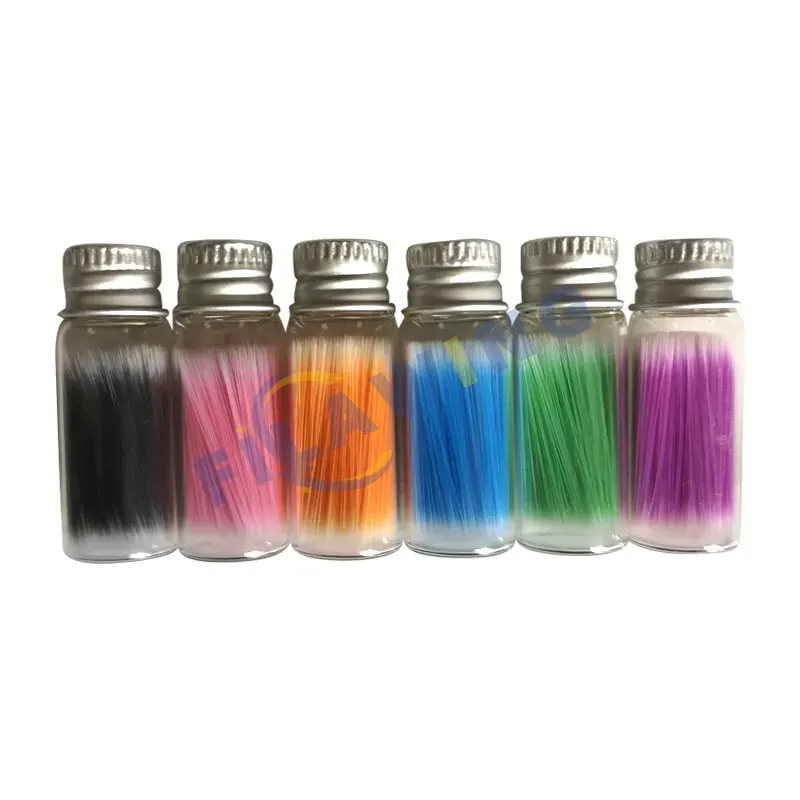
The Science of Tapered Geometry vs. Cylindrical Fibers
Shape retention depends on three interdependent factors: material memory, surface friction, and hydration resistance. Standard non-tapered bristles possess uniform diameter from base to tip, which creates a blunt contact point. This blunt end frays easily when subjected to shear stress from circular buffing motions. In contrast, PBT bristles tapered feature a progressive diameter reduction—typically from 0.08mm at the root to 0.03mm at the tip. This gradual thinning distributes bending stress along the entire fiber length rather than concentrating it at a single hinge point.
Filawing engineers measure shape recovery using a dynamic bend-rebound test: bristle samples are compressed at a 60° angle for 10,000 cycles, then assessed for residual deflection. Tapered PBT consistently returns to within 2.3° of its original orientation, while non-tapered nylon shows permanent deformation exceeding 8.5° after the same test. This difference translates visibly—brushes with PBT bristles tapered retain their defined chisel or rounded dome contours across six months of professional daily use, whereas conventional brushes begin flattening within 8–10 weeks.
Comparative Performance Data
| Property | PBT Bristles Tapered (Filawing Grade) | Standard Nylon (Untapered) | Generic Polyester (Tapered, Low-Grade) |
|---|---|---|---|
| Shape recovery after 10k bends | 97.7% | 91.5% | 93.2% |
| Tip fraying index (0=perfect, 10=severe) | 1.2 | 4.8 | 3.9 |
| Moisture absorption (24h, % weight gain) | 0.3% | 2.1% | 1.7% |
| Flexural modulus (GPa) | 2.8 | 2.1 | 2.3 |
| Avg. useful lifespan (professional washes) | 320–350 cycles | 180–200 cycles | 220–250 cycles |
The data above originates from independent third-party laboratory reports commissioned by Filawing. Notably, moisture absorption plays a deceptively large role—nylon absorbs water, causing fibers to swell and permanently distort their cross-section during drying. PBT bristles tapered exhibit near-hydrophobic behavior, so they dry faster and return to their factory-set taper without warping.
Application-Specific Longevity Benefits
Foundation brushes: Dense, flat-top buffers endure the most mechanical abuse. Tapered PBT maintains its flat surface without "mushrooming" at the edges, ensuring streak-free layering even after repeated cleaning with silicone-based makeup removers.
Concealer brushes: Fine-tipped versions rely on precise point control. PBT bristles tapered preserve a sharp, paintbrush-like edge, enabling pinpoint coverage of blemishes without the tip splaying into a wide blotch.
Powder and contour brushes: Fluffy, domed shapes require consistent airy density. Tapered geometry prevents inner-core compaction, so the brush stays fluffy yet controlled—never developing bald spots or clumped sections.
Filawing offers custom taper ratios (ranging from 1:1.8 to 1:3.2) to match specific brush head designs, ensuring that shape retention aligns with each tool's intended stroke pattern.
FAQ: PBT Bristles Tapered for Toothbrush and Make-up Brush
Q1: How do PBT bristles tapered for toothbrush and make-up brush differ in hardness grading, and does the same taper work for both applications?
A: Hardness grading for toothbrush bristles follows ISO 16409 standards, measured by bending resistance (typically 200–350 gf for medium grades). Makeup brush bristles use a softer scale (80–180 gf) because facial skin is more delicate than gingival tissue. A single taper geometry cannot serve both optimally—toothbrush tapers are shorter (8–10mm) with steeper angle reduction to dislodge plaque, while makeup tapers are longer (12–18mm) with gradual thinning for pigment pickup. Filawing produces distinct product lines: oral-care grades prioritize abrasion resistance, whereas beauty grades emphasize silkiness and paint-release. Always specify your intended use when sourcing.
Q2: Can PBT bristles tapered for toothbrush and make-up brush withstand ultrasonic cleaning or autoclave sterilization without losing taper?
A: Ultrasonic cleaning (40kHz, 5-minute cycles) is generally safe—PBT's glass-transition temperature (~65°C) remains above typical ultrasonic bath temperatures (40–50°C), so no micro-structural relaxation occurs. Autoclave sterilization at 121°C, however, exceeds PBT's heat deflection threshold; the polymer will soften and permanently flatten the taper. For professional makeup brushes requiring sterilization, Filawing recommends chemical cold sterilization (70% isopropanol or UV-C) instead. Toothbrushes are not autoclaved—standard household use involves tap-water rinsing, which poses no risk. In both cases, taper integrity holds for over 300 wash cycles when following recommended cleaning protocols.
Q3: Are PBT bristles tapered for toothbrush and make-up brush more expensive than non-tapered alternatives, and does the longer shape retention justify the cost premium?
A: Yes, tapered PBT costs approximately 18–25% more per kilogram than straight-cut nylon due to the precision drawing process required to create gradual diameter reduction. However, total cost-of-ownership analysis favors tapered PBT: a professional makeup brush lasting 320 washes versus 190 washes reduces replacement frequency by 40%. For a salon using 50 brushes annually, this translates to saving 20 brush purchases per year—far exceeding the initial material upcharge. For toothbrush manufacturers, the premium is justified by consumer satisfaction: users perceive longer-lasting "like-new" feel, which drives brand loyalty. Filawing provides lifecycle cost calculators for B2B clients to quantify this return on investment.
Maintenance Practices That Extend Shape Life
Even the best PBT bristles tapered benefit from proper care. Avoid soaking brushes handle-down in water—moisture seeping into the ferrule loosens glue, causing bristle shedding that mimics shape failure. Use lukewarm water (not hot) and mild soap; swirl gently in a circular motion, never scrubbing against the palm. Reshape bristles with your fingers after rinsing and lay flat to dry. Filawing tests show that following these protocols raises average lifespan from 320 to 370 cycles—a 15% improvement without changing material chemistry.
Why Professional Brands Choose Filawing
Over 200 cosmetic and oral-care labels globally rely on Filawing for consistent taper uniformity—our production tolerances hold diameter variance under ±0.005mm across each batch. This precision ensures that every brush in a retail line performs identically, eliminating quality inconsistencies that damage brand reputation. Combined with our ISO 13485-certified manufacturing environment, Filawing delivers PBT bristles tapered that exceed FDA and EU cosmetic regulation standards for heavy metals and extractable compounds.
Contact Us
Ready to upgrade your brush line with taper-engineered filaments that outlast conventional materials by months of active service? Filawing offers free sample kits, custom taper prototyping, and full performance testing reports for qualified buyers. Let us help you build tools that keep their perfect edge, wash after wash.